
UNITED STATES
SECURITIES AND EXCHANGE COMMISSION
Washington, D.C. 20549
______________________________________________________________________
FORM 8-K
______________________________________________________________________
CURRENT REPORT
PURSUANT TO SECTION13 OR 15(D)
OF THE SECURITIES EXCHANGE ACT OF1934
Date of Report (Date of earliest event reported)
(Exact name of registrant as specified in its charter)
______________________________________________________________________
| (State or other jurisdiction of incorporation) | (Commission File Number) | (I.R.S. Employer Identification No.) | ||||||||||||
(Address of principal executive offices,
including zip code)
(702 ) 825-9872
(Registrant’s telephone number, including area code)
(Former name or former address, if changed since last report)
Check the appropriate box below if the Form 8-K filing is intended to simultaneously satisfy the filing obligation of the registrant under any of the following provisions:
| Written communication pursuant to Rule 425 under the Securities Act (17 CFR 230.425) | |||||
| Soliciting material pursuant to Rule 14a-12 under the Exchange Act (17 CFR 240.14a-12) | |||||
| Pre-commencement communications pursuant to Rule 14d-2(b) under the Exchange Act (17 CFR 240.14d-2(b)) | |||||
| Pre-commencement communications pursuant to Rule 13e-4(c) under the Exchange Act (17 CFR 240.13e-4(c)) | |||||
Securities registered pursuant to Section 12(b) of the Act:
| Title of each class | Trading Symbol(s) | Name of each exchange on which registered | ||||||||||||
Indicate by check mark whether the registrant is an emerging growth company as defined in Rule 405 of the Securities Act of 1933 (§230.405 of this chapter) or Rule 12b-2 of the Securities Exchange Act of 1934 (§240.12b-2 of this chapter).
Emerging growth company x
If an emerging growth company, indicate by check mark if the registrant has elected not to use the extended transition period for complying with any new or revised financial accounting standards provided pursuant to Section 13(a) of the Exchange Act. ¨
Item 2.02. Results of Operations and Financial Condition.
On August 11, 2026, Zura Bio Limited (the “Company”) issued a press release announcing its second quarter 2026 financial results. A copy of the press release is furnished herewith as Exhibit 99.1 and incorporated herein by reference.
The information furnished under this Item 2.02 (including Exhibit 99.1) shall not be deemed “filed” for purposes of Section 18 of the Securities Exchange Act of 1934, as amended (the “Exchange Act”), or subject to the liabilities of that section or Sections 11 and 12(a)(2) of the Securities Act of 1933, as amended (the “Securities Act”). The information in this Item 2.02 (including Exhibit 99.1) shall not be deemed incorporated by reference into any other filing with the Securities and Exchange Commission (the “SEC”) made by the Company, whether made before or after the date hereof, regardless of any general incorporation language in such filing, except as expressly set forth by specific reference in such filing.
Item 7.01. Regulation FD Disclosure.
On August 11, 2026, the Company provided an updated corporate presentation that may be used in connection with upcoming presentations at conferences and investor meetings. The full text of the Company’s corporate presentation is filed as Exhibit 99.2 hereto, and incorporated herein by reference, and may also be accessed through the “News & Events” section of the Company’s website at investors.zurabio.com.
The information furnished under this Item 7.01 (including Exhibit 99.2) shall not be deemed “filed” for purposes of Section 18 of the Exchange Act, or subject to the liabilities of that section or Sections 11 and 12(a)(2) of the Securities Act. The information in this Item 7.01 (including Exhibit 99.2) shall not be deemed incorporated by reference into any other filing with the SEC made by the Company, whether made before or after the date hereof, regardless of any general incorporation language in such filing, except as expressly set forth by specific reference in such a filing.
Item 9.01. Financial Statements and Exhibits.
(d) Exhibits.
| Exhibit No. | Description | |||||||
| 104 | Cover Page Interactive Data File (embedded within the Inline XBRL document). | |||||||
SIGNATURES
Pursuant to the requirements of the Securities Exchange Act of 1934, the registrant has duly caused this report to be signed on its behalf by the undersigned hereunto duly authorized.
| ZURA BIO LIMITED | ||||||||
| Date: August 11, 2026 | By: | /s/ Kim Davis | ||||||
| Kim Davis | ||||||||
| Chief Operating Officer, Chief Legal Officer and Corporate Secretary | ||||||||
Exhibit 99.1

Zura Bio Reports Second Quarter 2026 Financial Results and Recent Corporate Updates
•TibuSHIELD enrollment complete, exceeding initial enrollment target with 247 participants randomized in HS; topline data expected Q4 2026
•TibuSURE enrollment complete, exceeding initial enrollment target with 91 participants randomized in SSc; topline data expected H1 2027
•Zura plans to initiate a Phase 2 study for tibulizumab in polymyalgia rheumatica (PMR) by year-end 2026
•Cash and cash equivalents of $205.1 million as of June 30, 2026, which is expected to fund planned operations through at least the end of 2028
HENDERSON, Nev.--(BUSINESS WIRE)--August 11, 2026-- Zura Bio Limited (Nasdaq: ZURA) (“Zura”), a clinical‑stage biotechnology company developing novel and differentiated medicines to meaningfully improve the lives of patients with serious and debilitating autoimmune and inflammatory diseases, today announced financial results for the second quarter ended June 30, 2026, and provided recent corporate updates.
“The second quarter was marked by strong execution across our tibulizumab programs, with enrollment now complete in both TibuSHIELD and TibuSURE—each exceeding its initial enrollment target—underscoring growing conviction in dual IL-17 and BAFF inhibition,” said Sandeep Kulkarni, M.D., Chief Executive Officer of Zura. “We are excited to nominate polymyalgia rheumatica as the third indication for tibulizumab, a debilitating disorder with high unmet need and important evidence supporting the roles of both IL-17 and BAFF. With cash expected to fund planned operations through at least the end of 2028, we believe we are well positioned—operationally, financially, and scientifically—as we approach our first topline readout in the fourth quarter of this year.”
PROGRAM UPDATES
Tibulizumab (ZB‑106)
Zura has completed enrollment in both Phase 2 studies of tibulizumab, a bispecific antibody designed to neutralize interleukin-17 (IL-17) and B-cell activating factor (BAFF), key mediators of inflammation and fibrosis, and announced plans to initiate a Phase 2 study in a third indication for tibulizumab by year end 2026.
•TibuSHIELD (HS): The Phase 2 clinical study evaluating tibulizumab in adults with hidradenitis suppurativa (HS) has completed and exceeded enrollment, with 247 participants. Topline data are anticipated in the fourth quarter of 2026.
•TibuSURE (SSc): The Phase 2 clinical study evaluating tibulizumab in adults with SSc has completed and exceeded enrollment, with 91 participants. Topline data are anticipated in the first half of 2027.
•NEXUS-PMR (PMR) — new indication: Zura has selected PMR as the third indication for tibulizumab. PMR is a common inflammatory rheumatic disease of older adults characterized by disabling bilateral shoulder and hip-girdle pain and stiffness, for which treatment options beyond long-term glucocorticoids remain limited. Over 700,000 people live with PMR today in the United States and the standard of care leaves most patients steroid-dependent, with a median time to permanent discontinuation of glucocorticoids of approximately six years. Zura believes tibulizumab's combined inhibition of IL‑17 and BAFF may provide greater and more durable therapeutic benefit relative to other agents that only block a single pathway. Zura has engaged with the U.S. Food and Drug Administration (FDA) and received feedback that was constructive and supportive of the Company's proposed development strategy. Incorporating this feedback, Zura plans to initiate a Phase 2 study, NEXUS-PMR, evaluating tibulizumab in adult participants with PMR by year end 2026.
Tibulizumab is an investigational compound and has not been approved for marketing by the FDA or any other regulatory authority.
Additional Clinical Stage Product Candidates
In addition to tibulizumab, Zura is continuing its evaluation of potential development approaches for torudokimab (ZB‑880) and crebankitug (ZB‑168), informed by current clinical and translational evidence and ongoing assessment of the evolving competitive landscape.
SECOND QUARTER 2026 FINANCIAL RESULTS
Cash Position
As of June 30, 2026, Zura had cash and cash equivalents of $205.1 million. Zura expects that its existing cash and cash equivalents are sufficient to support planned operations through at least the end of 2028.
Research and Development (R&D) Expenses
R&D expenses were $20.7 million for the second quarter of 2026, compared to $8.7 million for the same period in 2025. The increase was primarily driven by the advancement of Zura’s Phase 2 tibulizumab clinical programs.
General and Administrative (G&A) Expenses
G&A expenses were $8.6 million for the second quarter of 2026, compared to $9.4 million for the same period in 2025. The decrease was primarily due to lower expense in professional fees.
Net loss for the second quarter of 2026 was $26.3 million, or $0.21 per share, compared to $16.0 million, or $0.17 per share, for the same period in 2025.
ABOUT ZURA
Zura is a clinical-stage, multi-asset immunology company developing novel dual-pathway antibodies for autoimmune and inflammatory diseases with unmet need. Zura’s pipeline includes product candidates designed to target key mechanisms of immune system imbalance, with the goal of improving efficacy, safety, and dosing convenience for patients.
Zura’s lead product candidate, tibulizumab (ZB-106), is being evaluated in two Phase 2 clinical studies in adults: TibuSHIELD, a study in hidradenitis suppurativa (HS), and TibuSURE, a study in systemic sclerosis (SSc). Additional product candidates torudokimab (ZB-880) and crebankitug (ZB-168) have completed Phase 1/1b studies and are being evaluated for their potential across a range of autoimmune and inflammatory conditions.
For more information, please visit www.zurabio.com.
FORWARD-LOOKING STATEMENTS
Any statements contained in this press release that do not describe historical facts may constitute “forward‑looking statements” as that term is defined in the Private Securities Litigation Reform Act of 1995. These statements may be identified by words and phrases such as “anticipate,” “believe,” “continue,” “could,” “designed to,” “expect,” “goal,” “intend,” “may,” “outlook,” “plan,” “potential,” “should,” “will,” and similar expressions, and are based on Zura’s current beliefs and expectations. These forward‑looking statements include, but are not limited to, statements regarding the development and potential therapeutic benefits of Zura’s product candidates; the initiation, timing, progress, design and results of Zura’s current and future clinical trials, including the anticipated reporting of data therefrom; the potential to expand Zura’s product candidates into additional indications; Zura's interactions and engagement with the FDA, and the outcome of any related feedback on Zura's development strategy; Zura's evaluation of potential development approaches for its product candidates; the sufficiency of Zura’s cash resources and projected cash runway; and other statements that are not historical facts. These statements involve risks and uncertainties that could cause actual results to differ materially from those reflected in such forward‑looking statements. Risks and uncertainties that may cause actual results to differ materially
include, but are not limited to: uncertainties inherent in the development of therapeutic product candidates, such as the risk that one or more of Zura’s current or future product candidates may not be successfully developed or commercialized; the risk of delay or cessation of any planned clinical trials of Zura’s current or future product candidates; the risk that prior results, including signals of safety, activity or durability of effect observed in preclinical studies or earlier clinical trials, may not be replicated or may not continue in ongoing or future studies or clinical trials; the risk that modeling data indicating therapeutic potential, or clinical evidence from other drug candidates, may not be predictive of results in Zura’s current or future clinical trials; the risk that Zura’s product candidates or procedures in connection with their administration may not have the safety or efficacy profiles anticipated; risks related to the accuracy of Zura’s estimates of expenses, capital requirements and needs for additional financing; changes in expected or existing competition; changes in the regulatory environment; uncertainties related to the timing and outcome of the regulatory approval process; unexpected litigation or other disputes; the impact of macroeconomic conditions on Zura’s business, clinical trials and financial position; and other risks and uncertainties described in Zura’s Annual Report on Form 10‑K for the year ended December 31, 2025, and other filings with the Securities and Exchange Commission. Any forward‑looking statements speak only as of the date of this press release and are based on information available to Zura as of the date hereof. Zura assumes no obligation to, and does not intend to, update any forward‑looking statements, whether as a result of new information, future events or otherwise, except as required by law.
CONTACTS
Investor and media inquiries:
ir@zurabio.com
ZURA BIO LIMITED
CONSOLIDATED BALANCE SHEETS
(In thousands, except share data)
| June 30, 2026 | December 31, 2025 | ||||||||||
| (unaudited) | |||||||||||
| Assets | |||||||||||
| Current assets | |||||||||||
| Cash and cash equivalents | $ | 205,134 | $ | 109,407 | |||||||
| Prepaid expenses and other current assets | 5,366 | 2,903 | |||||||||
| Total current assets | 210,500 | 112,310 | |||||||||
| Property and equipment, net | 149 | 126 | |||||||||
| Other assets | 2,754 | 1,512 | |||||||||
| Total assets | $ | 213,403 | $ | 113,948 | |||||||
| Liabilities and Shareholders’ Equity | |||||||||||
| Current liabilities | |||||||||||
| Accounts payable and accrued expenses | $ | 16,318 | $ | 12,410 | |||||||
| Total current liabilities | 16,318 | 12,410 | |||||||||
| Total liabilities | 16,318 | 12,410 | |||||||||
| Commitments and contingencies | |||||||||||
| Shareholders’ Equity | |||||||||||
| Class A Ordinary Shares, $0.0001 par value; 300,000,000 shares authorized as of June 30, 2026 and December 31, 2025; 95,422,452 and 73,680,710 shares issued and outstanding as of June 30, 2026 and December 31, 2025, respectively | 10 | 7 | |||||||||
| Additional paid-in capital | 472,149 | 326,078 | |||||||||
| Accumulated deficit | (275,074) | (224,547) | |||||||||
| Total shareholders’ equity | 197,085 | 101,538 | |||||||||
| Total liabilities and shareholders’ equity | $ | 213,403 | $ | 113,948 | |||||||
ZURA BIO LIMITED
CONSOLIDATED STATEMENTS OF OPERATIONS
(Unaudited)
(In thousands, except share and per share data)
| For the Three Months Ended June 30, | For the Six Months Ended June 30, | ||||||||||||||||||||||
| 2026 | 2025 | 2026 | 2025 | ||||||||||||||||||||
| Operating expenses: | |||||||||||||||||||||||
| Research and development | $ | 20,706 | $ | 8,704 | $ | 35,452 | $ | 19,178 | |||||||||||||||
| General and administrative | 8,615 | 9,358 | 19,368 | 18,138 | |||||||||||||||||||
| Total operating expenses | 29,321 | 18,062 | 54,820 | 37,316 | |||||||||||||||||||
| Loss from operations | (29,321) | (18,062) | (54,820) | (37,316) | |||||||||||||||||||
| Other (income), net | |||||||||||||||||||||||
| Interest income | (1,920) | (1,717) | (3,239) | (3,534) | |||||||||||||||||||
| Other income, net | (1,016) | (352) | (973) | (347) | |||||||||||||||||||
| Total other (income), net | (2,936) | (2,069) | (4,212) | (3,881) | |||||||||||||||||||
| Loss before income taxes | (26,385) | (15,993) | (50,608) | (33,435) | |||||||||||||||||||
| Income tax benefit | (81) | — | (81) | — | |||||||||||||||||||
| Net loss | $ | (26,304) | $ | (15,993) | $ | (50,527) | $ | (33,435) | |||||||||||||||
| Net loss per share, basic and diluted | $ | (0.21) | $ | (0.17) | $ | (0.42) | $ | (0.36) | |||||||||||||||
| Weighted-average shares outstanding, basic and diluted | 126,803,970 | 94,289,954 | 119,553,659 | 93,630,719 | |||||||||||||||||||
Corporate Overview August 2026
2 Forward-Looking Statements Disclaimer This presentation contains “forward-looking statements” within the meaning of the “safe harbor” provisions of the Private Securities Litigation Reform Act of 1995. Words such as “expect,” “estimate,” “project,” “budget,” “forecast,” “anticipate,” “intend,” “plan,” “may,” “will,” “could,” “should,” “believe,” “predict,” “potential,” “continue,” “strategy,” “future,” “opportunity,” “would,” “seem,” “seek,” “outlook,” “goal,” “mission,” and similar expressions are intended to identify such forward-looking statements. Forward-looking statements are predictions, projections and other statements about future events that are based on current expectations, estimates, and assumptions and, as a result, are subject to risks and uncertainties that could cause actual results to differ materially from the expected results. These statements are based on various assumptions, whether or not identified in this presentation. These forward-looking statements may include, without limitation: Zura Bio’s clinical development plans; the design, initiation, conduct, enrollment and timing of its clinical trials; expectations regarding the timing of key milestones and anticipated data readouts; expectations regarding clinical programs, including the safety, efficacy, and therapeutic potential of Zura Bio’s product candidates; expectations regarding the commercial potential of Zura Bio’s product candidates; expectations regarding data readouts from third parties, including regulatory filings and approval status; expectations regarding market opportunities, including estimated total addressable markets, competitive landscape, addressable patient populations, or potential clinical differentiation; Zura Bio’s cash resources and projected cash runway; Zura Bio’s business strategies and objectives; and any other statements that are not historical facts. These forward-looking statements are provided for illustrative purposes only and are not intended to serve as, and must not be relied on, by an investor as a guarantee, an assurance, a prediction or a definitive statement of fact or probability. Actual events are difficult or impossible to predict and could differ materially from those expressed or implied in such forward-looking statements, as a result of these risks and uncertainties, which include, but are not limited to: Zura Bio’s expectations regarding its product candidates and their related benefits, and Zura Bio’s beliefs regarding competing product candidates or approved products, may not be achieved; Zura Bio's vision and strategy may not be successful; the timing of key events and initiation of Zura Bio's studies, and release of clinical data may take longer than anticipated or may not be achieved at all; Zura Bio’s expectations regarding the potential general acceptability and maintenance of its product candidates by regulatory authorities, payors, physicians, and patients may not be achieved; Zura Bio's ability to attract and retain key personnel; Zura Bio's expectations with respect to its future operating expenses, capital requirements and needs for additional financing may not be achieved; Zura Bio has not completed any clinical trials, and has no products approved for commercial sale; Zura Bio has incurred significant losses since inception, and expects to incur significant losses for the foreseeable future and may not be able to achieve or sustain profitability in the future; Zura Bio requires substantial additional capital to finance its operations, and if it is unable to raise such capital when needed or on acceptable terms, Zura Bio may be forced to delay, reduce, and/or eliminate one or more of its development programs or future commercialization efforts; Zura Bio may be unable to renew existing contracts, or enter into new contracts or may experience disputes or other challenges with respect to our vendors or other third parties; Zura Bio relies on third-party contract development manufacturing organizations for the manufacture of clinical materials; Zura Bio relies on contract research organizations, its clinical trial sites, and other third parties to conduct its preclinical studies and clinical trials; Zura Bio may be unable to obtain regulatory approval for its product candidates, and there may be related restrictions or limitations of any approved products; Zura Bio may be unable to successfully respond to general economic and geopolitical conditions; Zura Bio may be unable to effectively achieve or manage growth; Zura Bio faces competitive pressures from other companies worldwide; Zura Bio may be unable to adequately protect its intellectual property rights; and other factors set forth in documents filed, or to be filed by Zura Bio, with the Securities and Exchange Commission (SEC), including the risks and uncertainties described in the “Risk Factors” section of Zura Bio’s Annual Report on Form 10-K for the year ended December 31, 2025, and other filings with the SEC. Zura Bio cautions that the foregoing list of factors is not exclusive or exhaustive and not to place undue reliance upon any forward-looking statements, which speak only as of the date made. Zura Bio does not undertake or accept any obligation to update any forward-looking statements, whether as a result of new information, future developments, or otherwise, except as required by law. Zura gives no assurance can be given that the expectations expressed herein will be achieved or that deviations from such expectations will not be material. This presentation discusses product candidates that are under clinical investigation and have not been approved for marketing by the U.S. Food and Drug Administration or any other regulatory authority. No representation is made as to the safety, efficacy, or likelihood of regulatory approval of these product candidates for the uses under investigation. Comparisons across clinical trials or product candidates should be interpreted with caution, as differences in study design, inclusion/exclusion criteria, patient populations, endpoints, dosing regimens, and other variables may limit interpretability. Statements in this presentation regarding clinical trials involving product candidates originating from third parties (including Eli Lilly, Pfizer and Novartis) have not been reviewed, verified, or endorsed by such parties.
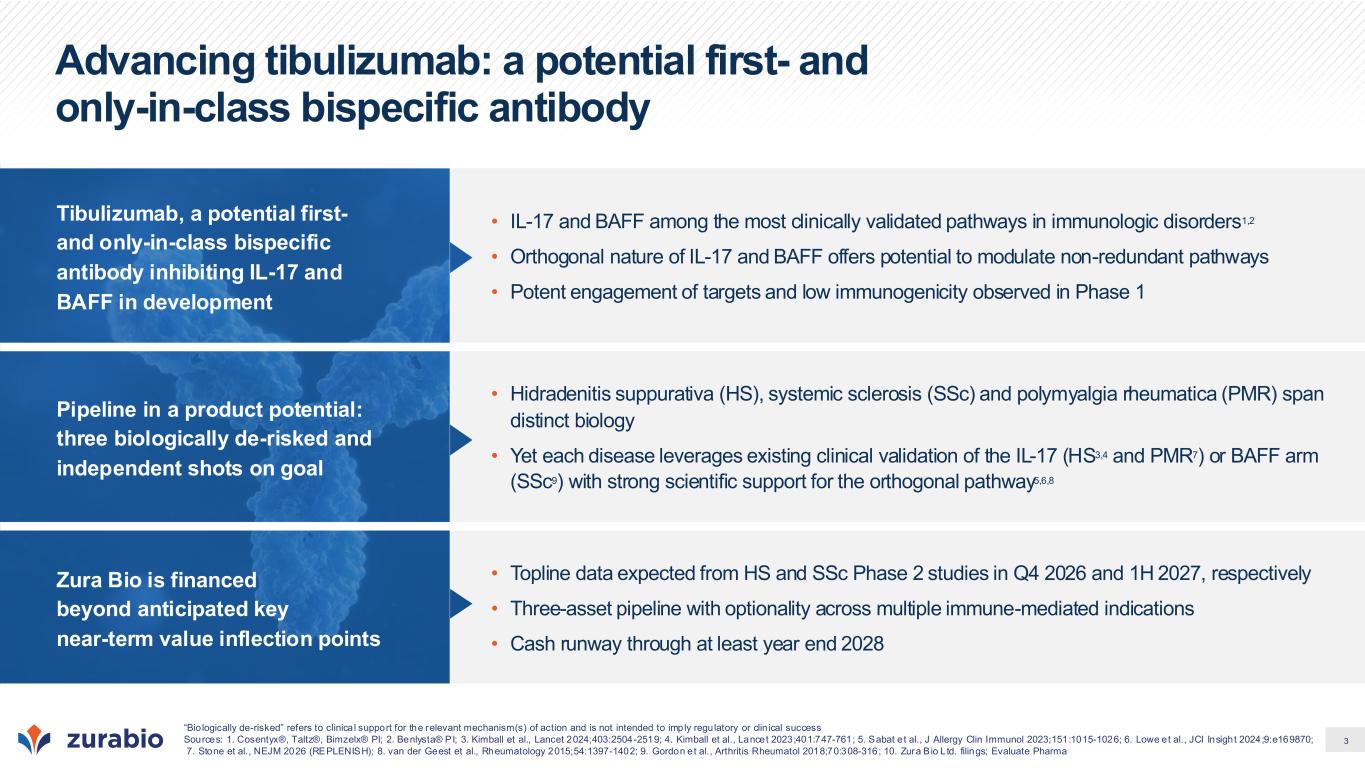
3 Advancing tibulizumab: a potential first- and only-in-class bispecific antibody Tibulizumab, a potential first- and only-in-class bispecific antibody inhibiting IL-17 and BAFF in development • IL-17 and BAFF among the most clinically validated pathways in immunologic disorders1,2 • Orthogonal nature of IL-17 and BAFF offers potential to modulate non-redundant pathways • Potent engagement of targets and low immunogenicity observed in Phase 1 Pipeline in a product potential: three biologically de-risked and independent shots on goal • Hidradenitis suppurativa (HS), systemic sclerosis (SSc) and polymyalgia rheumatica (PMR) span distinct biology • Yet each disease leverages existing clinical validation of the IL-17 (HS3,4 and PMR7) or BAFF arm (SSc9) with strong scientific support for the orthogonal pathway5,6,8 Zura Bio is financed beyond anticipated key near-term value inflection points • Topline data expected from HS and SSc Phase 2 studies in Q4 2026 and 1H 2027, respectively • Three-asset pipeline with optionality across multiple immune-mediated indications • Cash runway through at least year end 2028 “Bio logically de-risked” refers to clinica l support for the relevant mechanism(s) of action and is not intended to imply regulatory or clin ical success Sources: 1. Cosentyx®, Taltz®, Bimzelx® PI; 2. Benlysta® PI; 3. Kimball et al., Lancet 2024;403:2504-2519; 4. Kimball et al., Lancet 2023;401:747-761; 5. Sabat et al., J Allergy Clin Immunol 2023;151:1015-1026; 6. Lowe et al., JCI Insight 2024;9:e169870; 7. Stone et al., NEJM 2026 (REPLENISH); 8. van der Geest et al., Rheumatology 2015;54:1397-1402; 9. Gordon et al., Arthritis Rheumatol 2018;70:308-316; 10. Zura Bio Ltd. filings; Evaluate Pharma
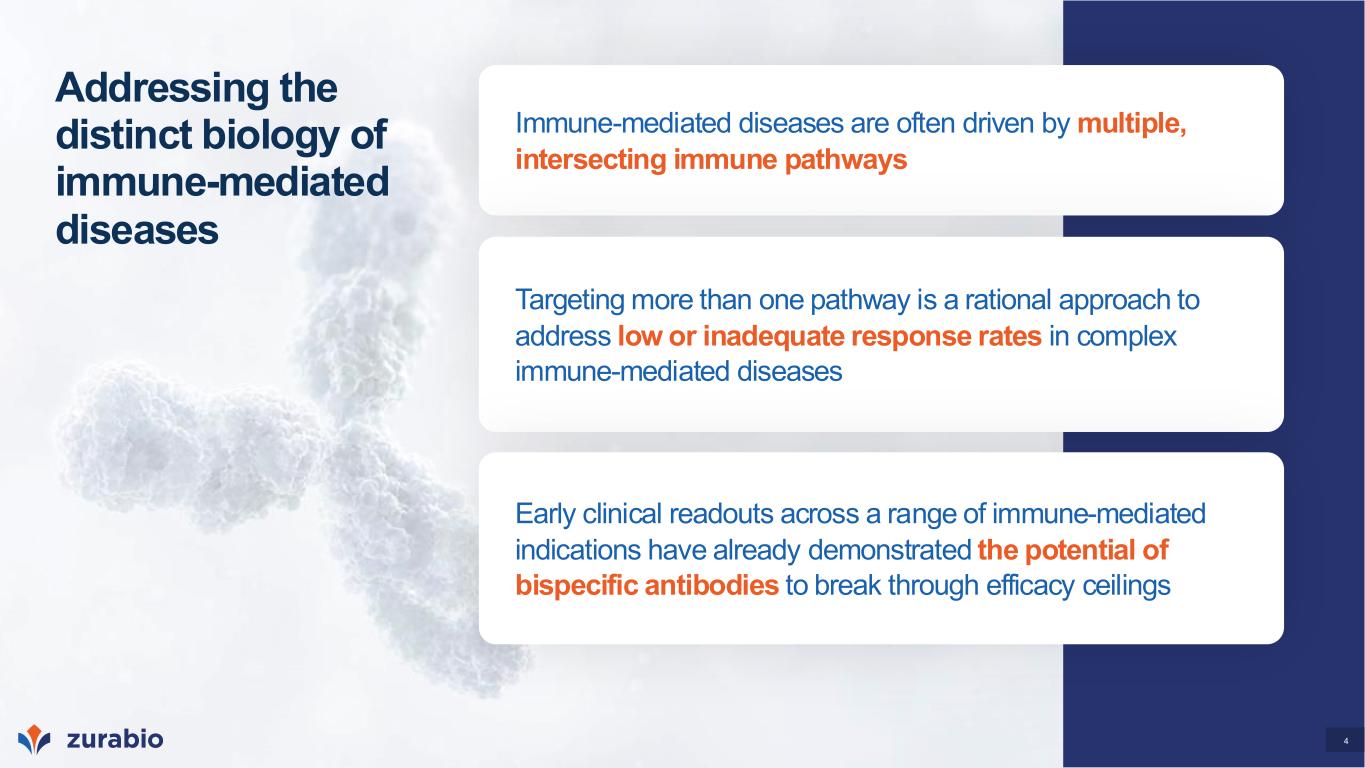
4 Addressing the distinct biology of immune-mediated diseases Immune-mediated diseases are often driven by multiple, intersecting immune pathways Targeting more than one pathway is a rational approach to address low or inadequate response rates in complex immune-mediated diseases Early clinical readouts across a range of immune-mediated indications have already demonstrated the potential of bispecific antibodies to break through efficacy ceilings
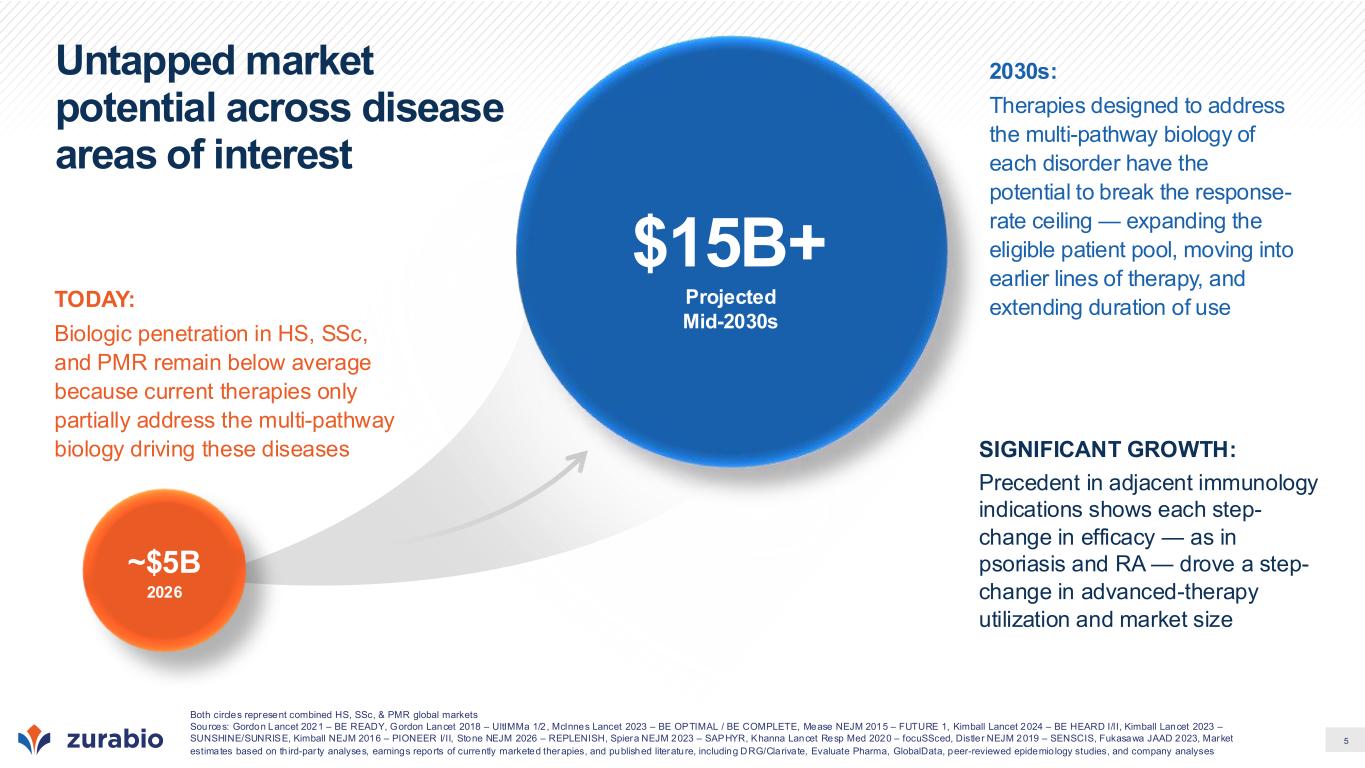
5 Untapped market potential across disease areas of interest ~$5B 2026 Projected Mid-2030s $15B+ TODAY: Biologic penetration in HS, SSc, and PMR remain below average because current therapies only partially address the multi-pathway biology driving these diseases 2030s: Therapies designed to address the multi-pathway biology of each disorder have the potential to break the response- rate ceiling — expanding the eligible patient pool, moving into earlier lines of therapy, and extending duration of use SIGNIFICANT GROWTH: Precedent in adjacent immunology indications shows each step- change in efficacy — as in psoriasis and RA — drove a step- change in advanced-therapy utilization and market size Both circles represent combined HS, SSc, & PMR global markets Sources: Gordon Lancet 2021 – BE READY, Gordon Lancet 2018 – UltIMMa 1/2, McInnes Lancet 2023 – BE OPTIMAL / BE COMPLETE, Mease NEJM 2015 – FUTURE 1, Kimball Lancet 2024 – BE HEARD I/II, Kimball Lancet 2023 – SUNSHINE/SUNRISE, Kimball NEJM 2016 – PIONEER I/II, Stone NEJM 2026 – REPLENISH, Spiera NEJM 2023 – SAPHYR, Khanna Lancet Resp Med 2020 – focuSSced, Distler NEJM 2019 – SENSCIS, Fukasawa JAAD 2023, Market estimates based on th ird-par ty analyses, earnings reports of currently marketed therapies, and published literature, including DRG/Clarivate, Evaluate Pharma, GlobalData, peer-reviewed epidemio logy studies, and company analyses
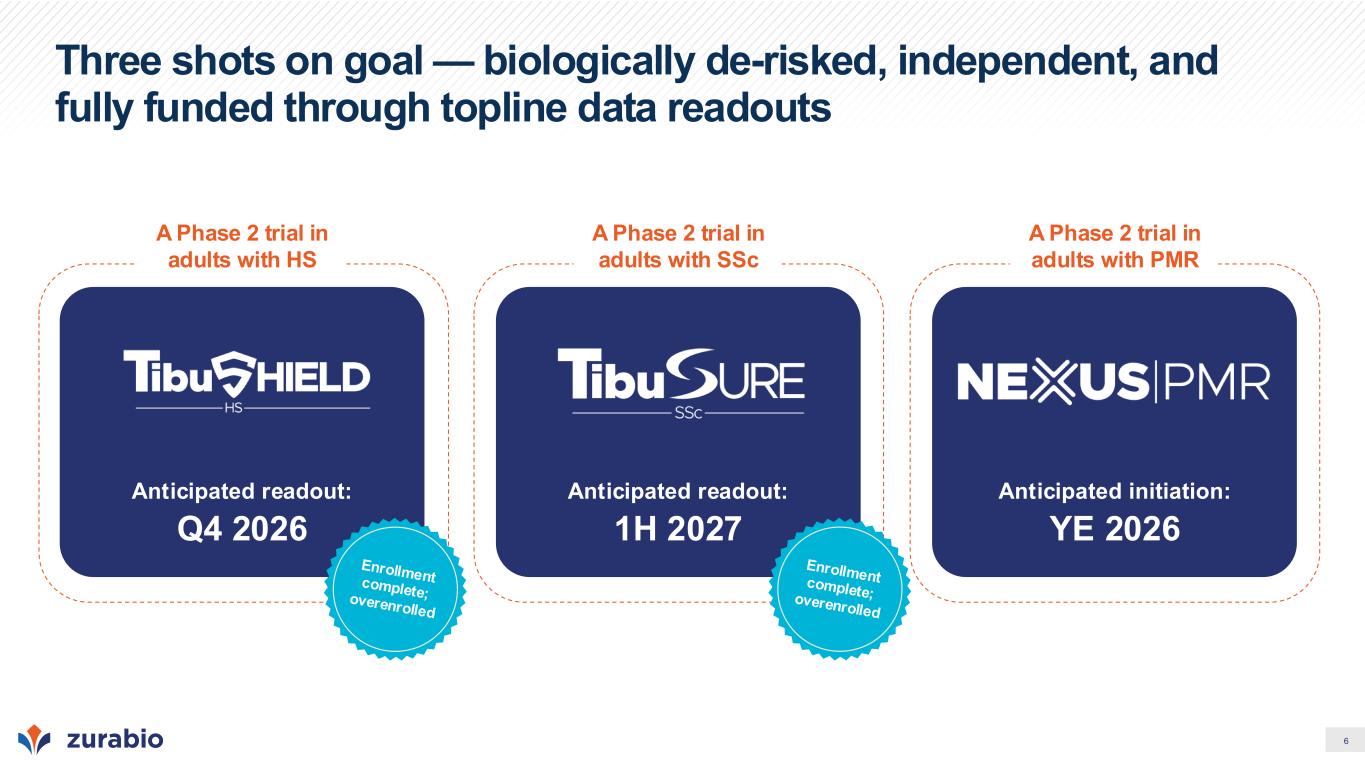
6 Three shots on goal — biologically de-risked, independent, and fully funded through topline data readouts A Phase 2 trial in adults with HS Anticipated readout: Q4 2026 A Phase 2 trial in adults with SSc Anticipated readout: 1H 2027 A Phase 2 trial in adults with PMR Anticipated initiation: YE 2026
7 Tibulizumab: Potential first- and only-in-class therapy Tibulizumab is an investigational agent. Its efficacy and safety have not been established or approved by the FDA or any other regulatory agency worldwide.
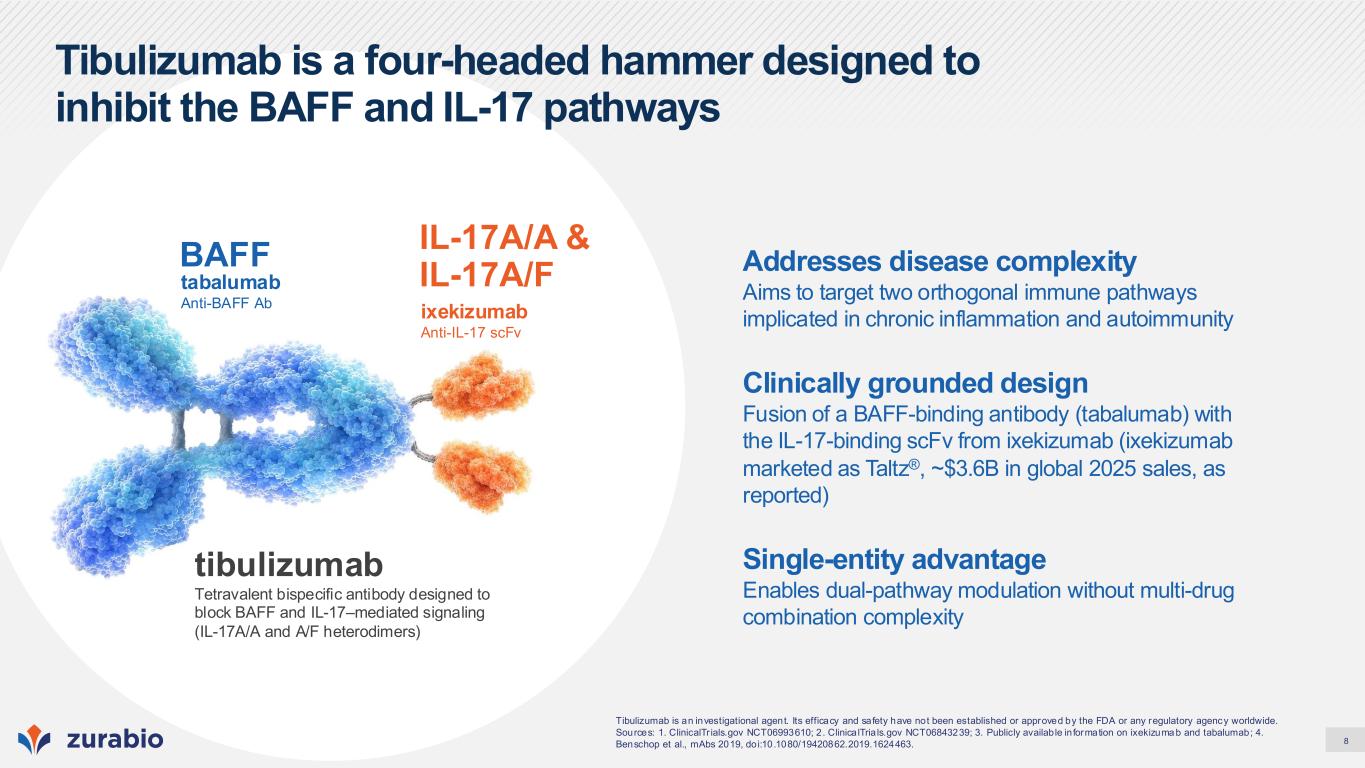
8 Tibulizumab is a four-headed hammer designed to inhibit the BAFF and IL-17 pathways ixekizumab Anti-IL-17 scFv IL-17A/A & IL-17A/Ftabalumab Anti-BAFF Ab BAFF tibulizumab Tetravalent bispecific antibody designed to block BAFF and IL-17–mediated signaling (IL-17A/A and A/F heterodimers) Tibulizumab is an investigational agent. Its efficacy and safety have not been established or approved by the FDA or any regulatory agency worldwide. Sources: 1. ClinicalTr ials.gov NCT06993610; 2 . Clinica lTria ls.gov NCT06843239; 3. Publicly availab le in formation on ixekizuma b and tabalumab; 4. Benschop et al., mAbs 2019, doi:10.1080/19420862.2019.1624463. Addresses disease complexity Aims to target two orthogonal immune pathways implicated in chronic inflammation and autoimmunity Clinically grounded design Fusion of a BAFF-binding antibody (tabalumab) with the IL-17-binding scFv from ixekizumab (ixekizumab marketed as Taltz®, ~$3.6B in global 2025 sales, as reported) Single-entity advantage Enables dual-pathway modulation without multi-drug combination complexity
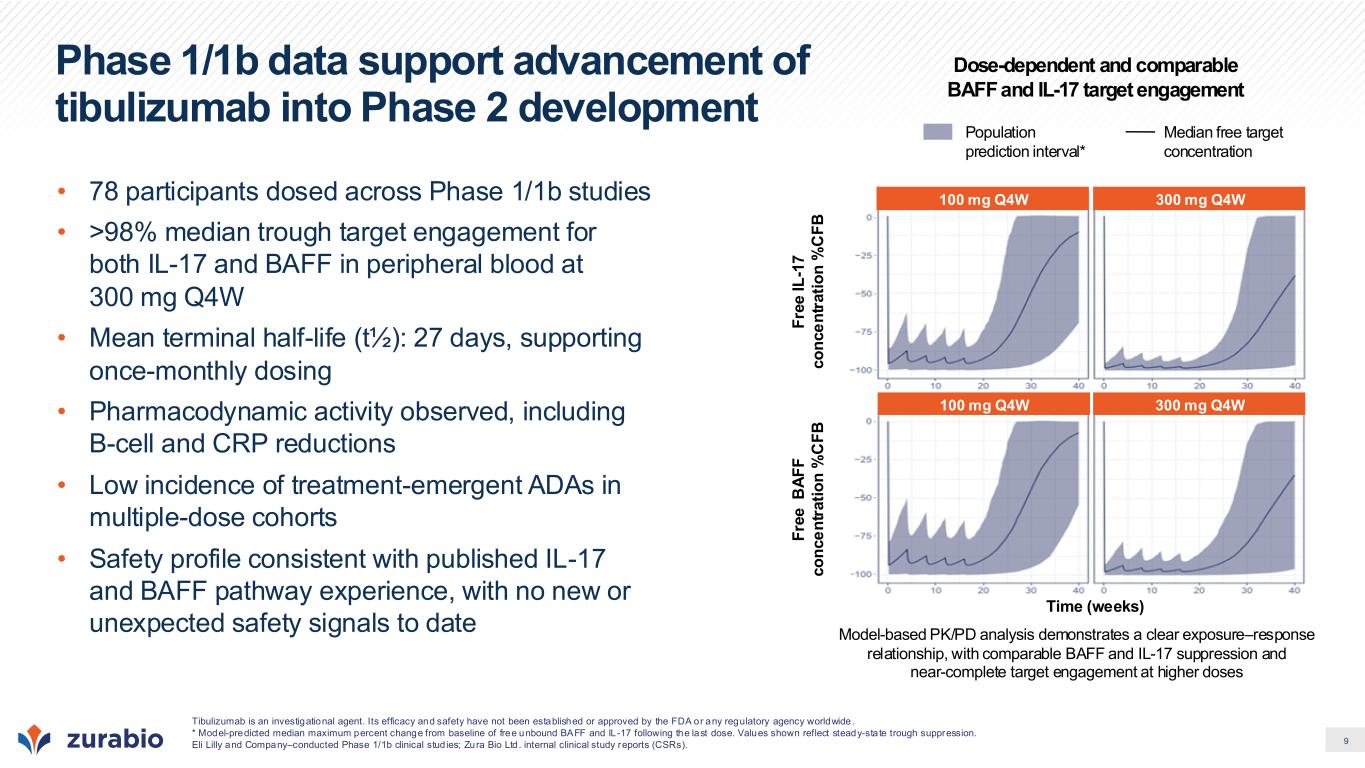
9 Phase 1/1b data support advancement of tibulizumab into Phase 2 development • 78 participants dosed across Phase 1/1b studies • >98% median trough target engagement for both IL-17 and BAFF in peripheral blood at 300 mg Q4W • Mean terminal half-life (t½): 27 days, supporting once-monthly dosing • Pharmacodynamic activity observed, including B-cell and CRP reductions • Low incidence of treatment-emergent ADAs in multiple-dose cohorts • Safety profile consistent with published IL-17 and BAFF pathway experience, with no new or unexpected safety signals to date Time (weeks) F re e B A F F c o n c e n tr a ti o n % C F B F re e I L -1 7 c o n c e n tr a ti o n % C F B 100 mg Q4W 300 mg Q4W 100 mg Q4W 300 mg Q4W Population prediction interval* Median free target concentration Dose-dependent and comparable BAFF and IL-17 target engagement Model-based PK/PD analysis demonstrates a clear exposure–response relationship, with comparable BAFF and IL-17 suppression and near-complete target engagement at higher doses Tibulizumab is an investigational agent. Its efficacy and safety have not been established or approved by the FDA or any regulatory agency worldwide. * Model-predicted median maximum percent change from baseline of free unbound BAFF and IL-17 following the last dose. Values shown reflect steady-state trough suppression. Eli Lilly and Company–conducted Phase 1/1b clinical stud ies; Zura Bio Ltd. internal clinical study reports (CSRs).
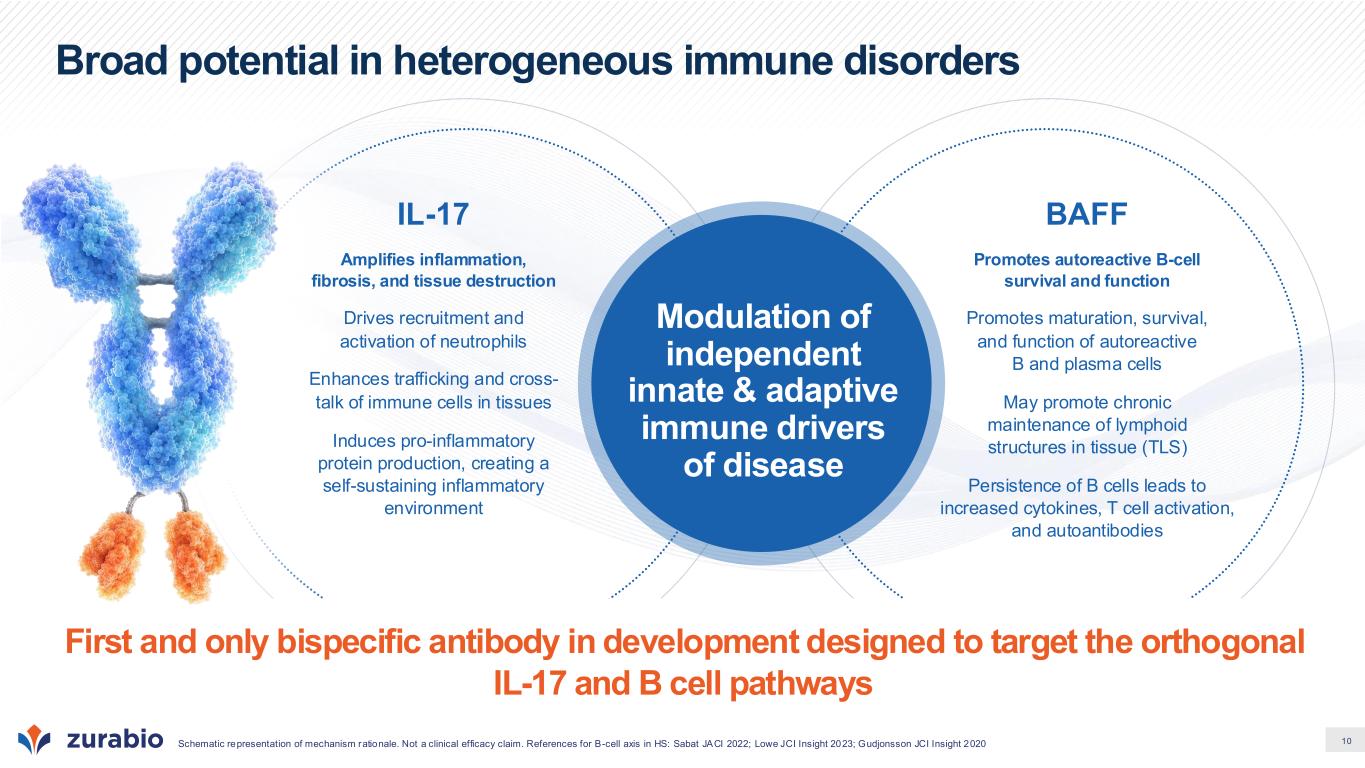
10 Modulation of independent innate & adaptive immune drivers of disease IL-17 Amplifies inflammation, fibrosis, and tissue destruction Drives recruitment and activation of neutrophils Enhances trafficking and cross- talk of immune cells in tissues Induces pro-inflammatory protein production, creating a self-sustaining inflammatory environment BAFF Promotes autoreactive B-cell survival and function Promotes maturation, survival, and function of autoreactive B and plasma cells May promote chronic maintenance of lymphoid structures in tissue (TLS) Persistence of B cells leads to increased cytokines, T cell activation, and autoantibodies Broad potential in heterogeneous immune disorders Schematic representation of mechanism rationale. Not a clinical efficacy claim. References for B-cell axis in HS: Sabat JACI 2022; Lowe JCI Insight 2023; Gudjonsson JCI Insight 2020 First and only bispecific antibody in development designed to target the orthogonal IL-17 and B cell pathways
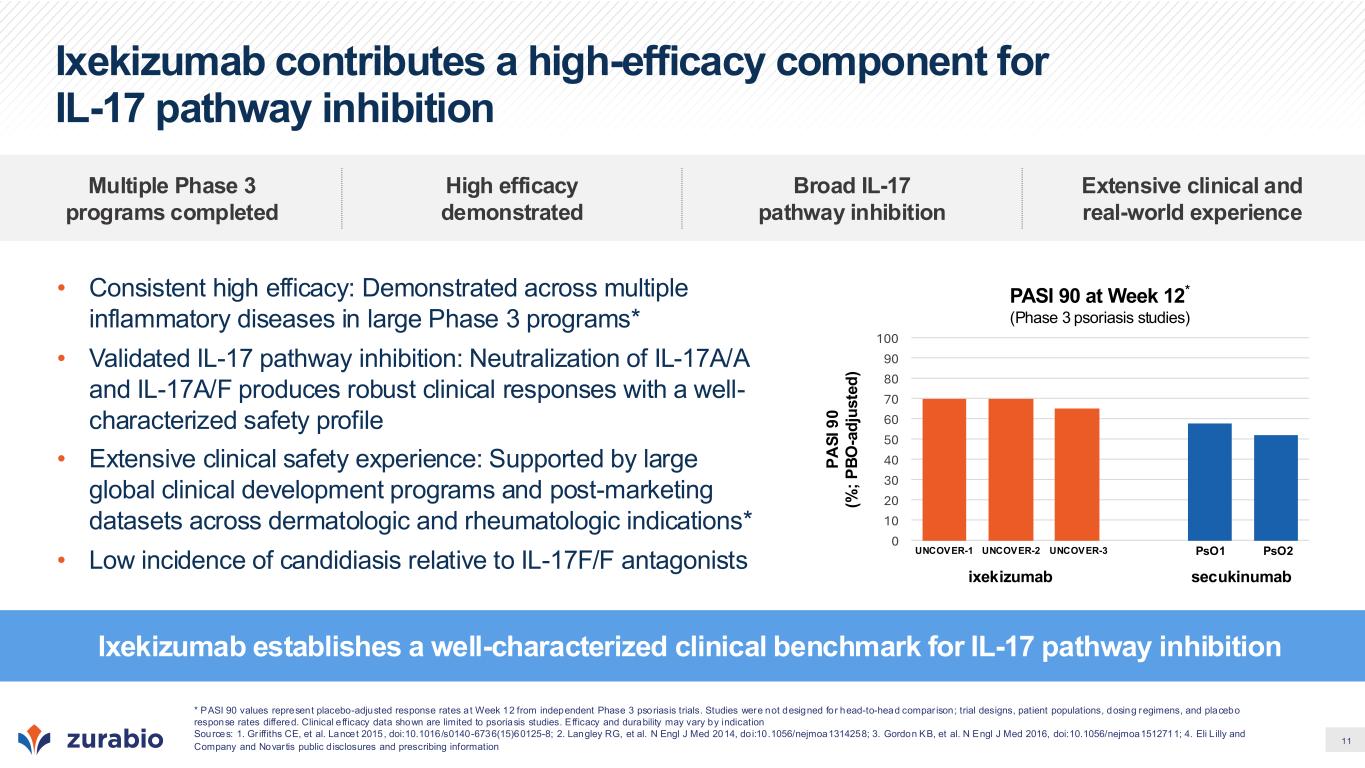
11 Ixekizumab contributes a high-efficacy component for IL-17 pathway inhibition • Consistent high efficacy: Demonstrated across multiple inflammatory diseases in large Phase 3 programs* • Validated IL-17 pathway inhibition: Neutralization of IL-17A/A and IL-17A/F produces robust clinical responses with a well- characterized safety profile • Extensive clinical safety experience: Supported by large global clinical development programs and post-marketing datasets across dermatologic and rheumatologic indications* • Low incidence of candidiasis relative to IL-17F/F antagonists Ixekizumab establishes a well-characterized clinical benchmark for IL-17 pathway inhibition Multiple Phase 3 programs completed High efficacy demonstrated Broad IL-17 pathway inhibition Extensive clinical and real-world experience secukinumab PASI 90 at Week 12* (Phase 3 psoriasis studies) P A S I 9 0 (% ; P B O -a d ju s te d ) 0 10 20 30 40 50 60 70 80 90 100 ixekizumab PsO1 PsO2UNCOVER-2 UNCOVER-3UNCOVER-1 * PASI 90 values represent placebo-adjusted response rates at Week 12 from independent Phase 3 psoriasis trials. Studies were not designed for head-to-head compar ison; trial designs, patient populations, dosing regimens, and placebo response rates differed. Clinical e fficacy data shown are limited to psoriasis studies. Efficacy and durability may vary by indication Sources: 1. Gr iffiths CE, et al. Lancet 2015, doi:10.1016/s0140-6736(15)60125-8; 2. Langley RG, et al. N Engl J Med 2014, doi:10.1056/nejmoa1314258; 3. Gordon KB, et al. N Engl J Med 2016, doi:10.1056/nejmoa1512711; 4. Eli L illy and Company and Novar tis public d isclosures and prescribing information
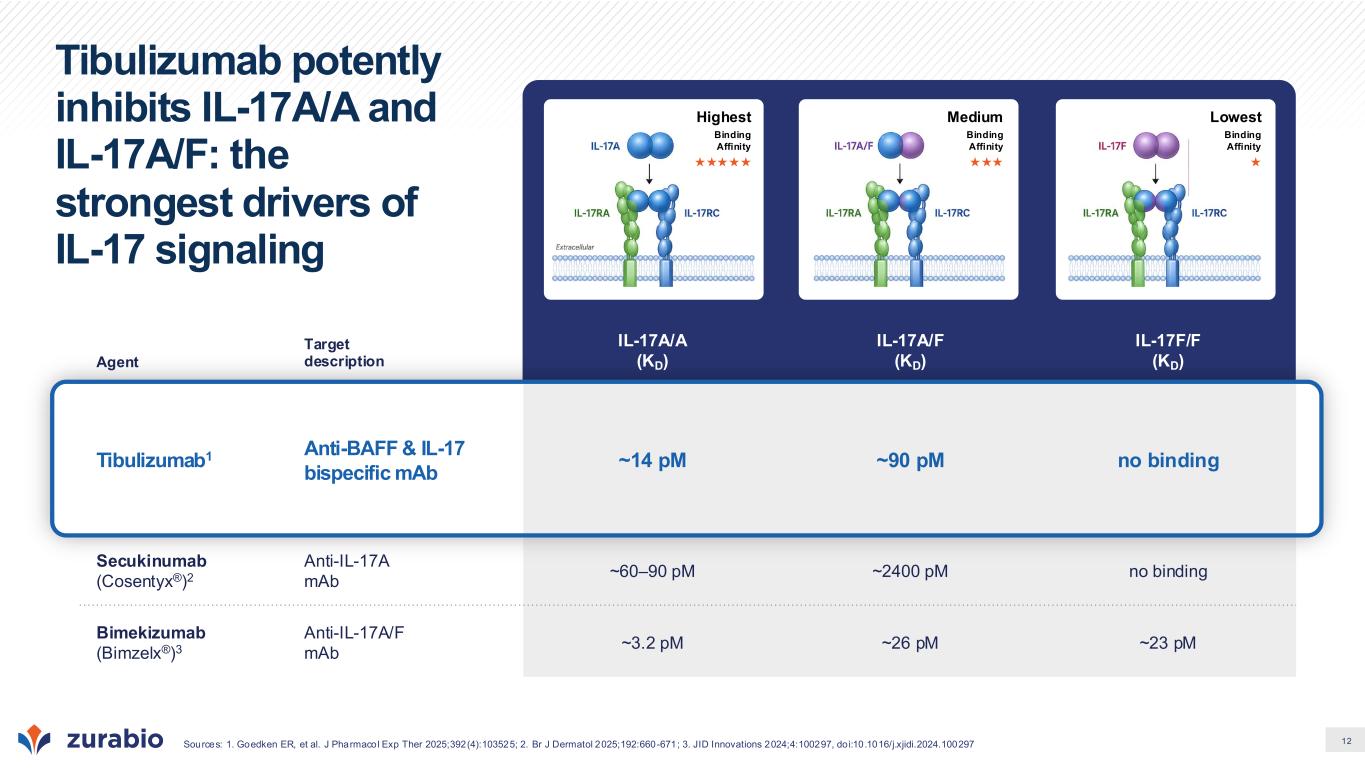
12 Tibulizumab potently inhibits IL-17A/A and IL-17A/F: the strongest drivers of IL-17 signaling Agent Target description IL-17A/A (KD) IL-17A/F (KD) IL-17F/F (KD) Tibulizumab1 Anti-BAFF & IL-17 bispecific mAb ~14 pM ~90 pM no binding Secukinumab (Cosentyx®)2 Anti-IL-17A mAb ~60–90 pM ~2400 pM no binding Bimekizumab (Bimzelx®)3 Anti-IL-17A/F mAb ~3.2 pM ~26 pM ~23 pM Sources: 1. Goedken ER, et al. J Pharmacol Exp Ther 2025;392(4):103525; 2. Br J Dermatol 2025;192:660-671; 3. JID Innovations 2024;4:100297, doi:10.1016/j.xjidi.2024.100297 Highest Binding Affinity Medium Binding Affinity Lowest Binding Affinity
13 Hidradenitis Suppurativa (HS)
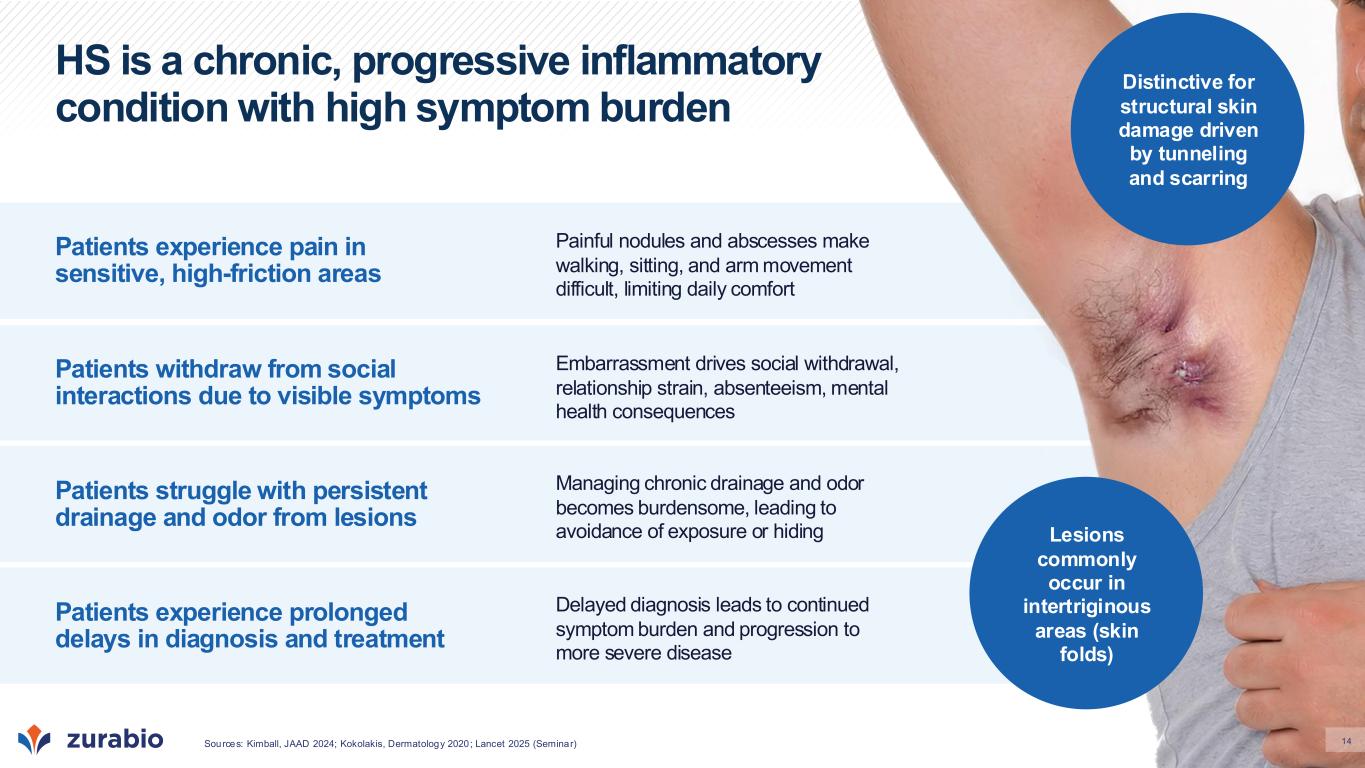
14 HS is a chronic, progressive inflammatory condition with high symptom burden Patients experience pain in sensitive, high-friction areas Patients withdraw from social interactions due to visible symptoms Patients struggle with persistent drainage and odor from lesions Patients experience prolonged delays in diagnosis and treatment Painful nodules and abscesses make walking, sitting, and arm movement difficult, limiting daily comfort Managing chronic drainage and odor becomes burdensome, leading to avoidance of exposure or hiding Embarrassment drives social withdrawal, relationship strain, absenteeism, mental health consequences Delayed diagnosis leads to continued symptom burden and progression to more severe disease Lesions commonly occur in intertriginous areas (skin folds) Distinctive for structural skin damage driven by tunneling and scarring Sources: Kimball, JAAD 2024; Kokolakis, Dermatology 2020; Lancet 2025 (Seminar)
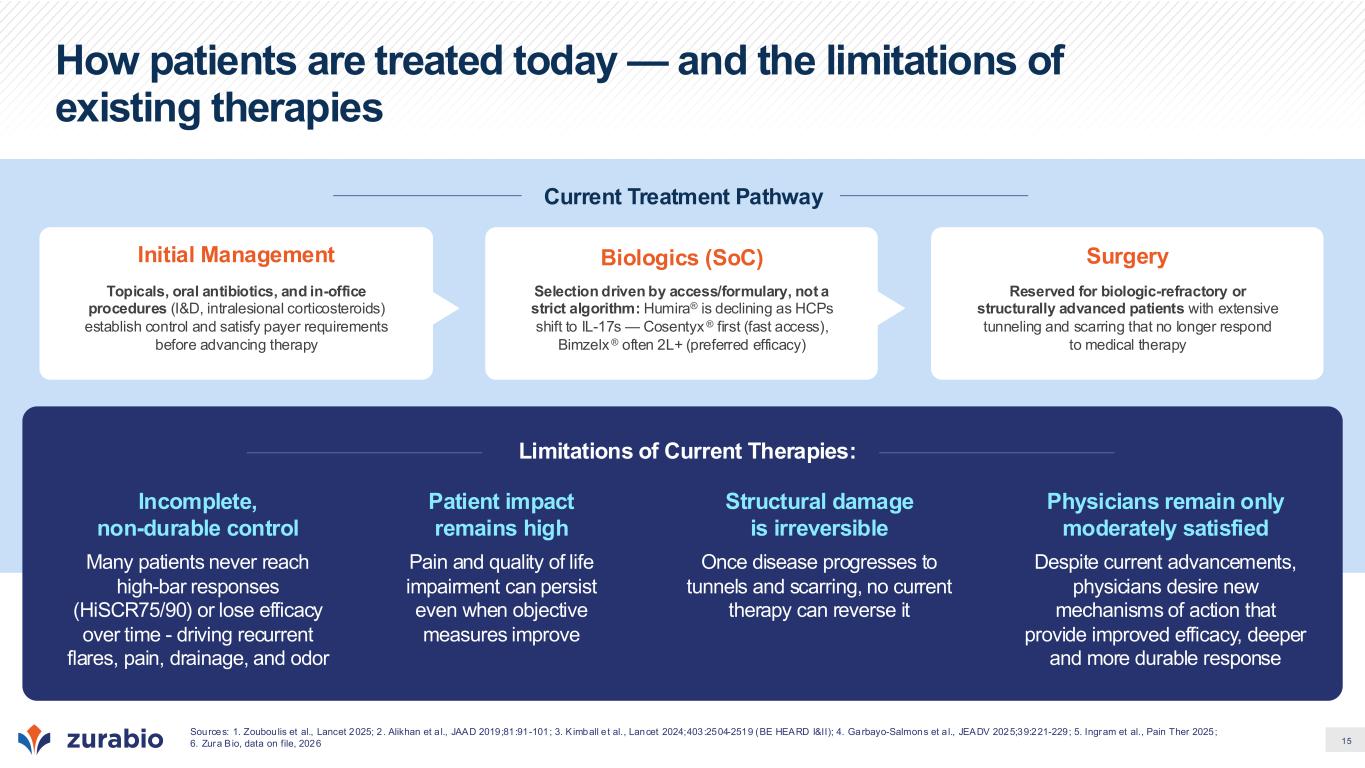
15 How patients are treated today — and the limitations of existing therapies Current Treatment Pathway Initial Management Topicals, oral antibiotics, and in-office procedures (I&D, intralesional corticosteroids) establish control and satisfy payer requirements before advancing therapy Biologics (SoC) Selection driven by access/formulary, not a strict algorithm: Humira® is declining as HCPs shift to IL-17s — Cosentyx ® first (fast access), Bimzelx ® often 2L+ (preferred efficacy) Surgery Reserved for biologic-refractory or structurally advanced patients with extensive tunneling and scarring that no longer respond to medical therapy Limitations of Current Therapies: Incomplete, non-durable control Many patients never reach high-bar responses (HiSCR75/90) or lose efficacy over time - driving recurrent flares, pain, drainage, and odor Structural damage is irreversible Once disease progresses to tunnels and scarring, no current therapy can reverse it Patient impact remains high Pain and quality of life impairment can persist even when objective measures improve Physicians remain only moderately satisfied Despite current advancements, physicians desire new mechanisms of action that provide improved efficacy, deeper and more durable response Sources: 1. Zouboulis et al., Lancet 2025; 2 . Alikhan et a l., JAAD 2019;81:91-101; 3. K imball e t al., Lancet 2024;403:2504-2519 (BE HEARD I&II); 4. Garbayo-Salmons et a l., JEADV 2025;39:221-229; 5. Ingram et al., Pain Ther 2025; 6. Zura Bio, data on file, 2026
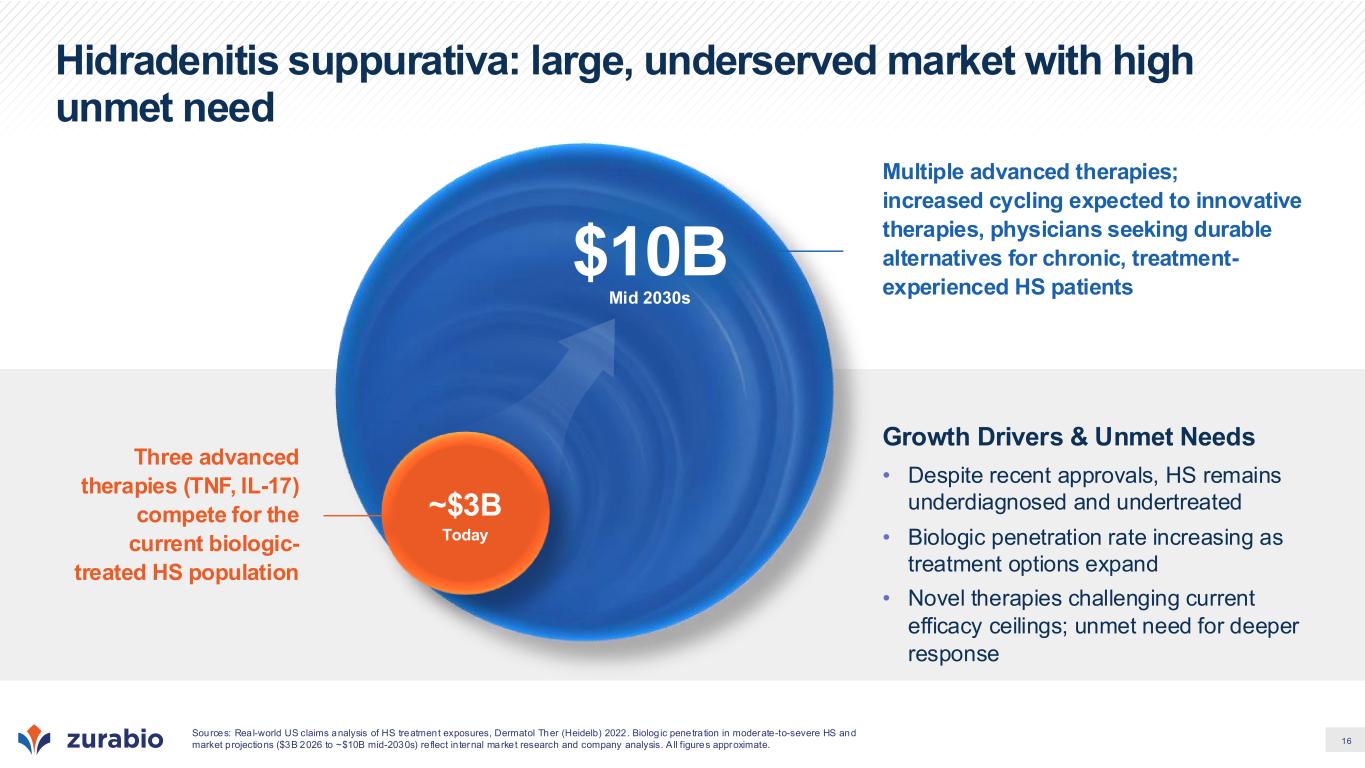
16 Hidradenitis suppurativa: large, underserved market with high unmet need Three advanced therapies (TNF, IL-17) compete for the current biologic- treated HS population Multiple advanced therapies; increased cycling expected to innovative therapies, physicians seeking durable alternatives for chronic, treatment- experienced HS patients Sources: Real-world US claims analysis of HS treatment exposures, Dermatol Ther (Heidelb) 2022. Biolog ic penetration in moderate-to-severe HS and market projections ($3B 2026 to ~$10B mid-2030s) re flect in ternal market research and company analysis. A ll figures approximate. Mid 2030s $10B Growth Drivers & Unmet Needs • Despite recent approvals, HS remains underdiagnosed and undertreated • Biologic penetration rate increasing as treatment options expand • Novel therapies challenging current efficacy ceilings; unmet need for deeper response ~$3B Today
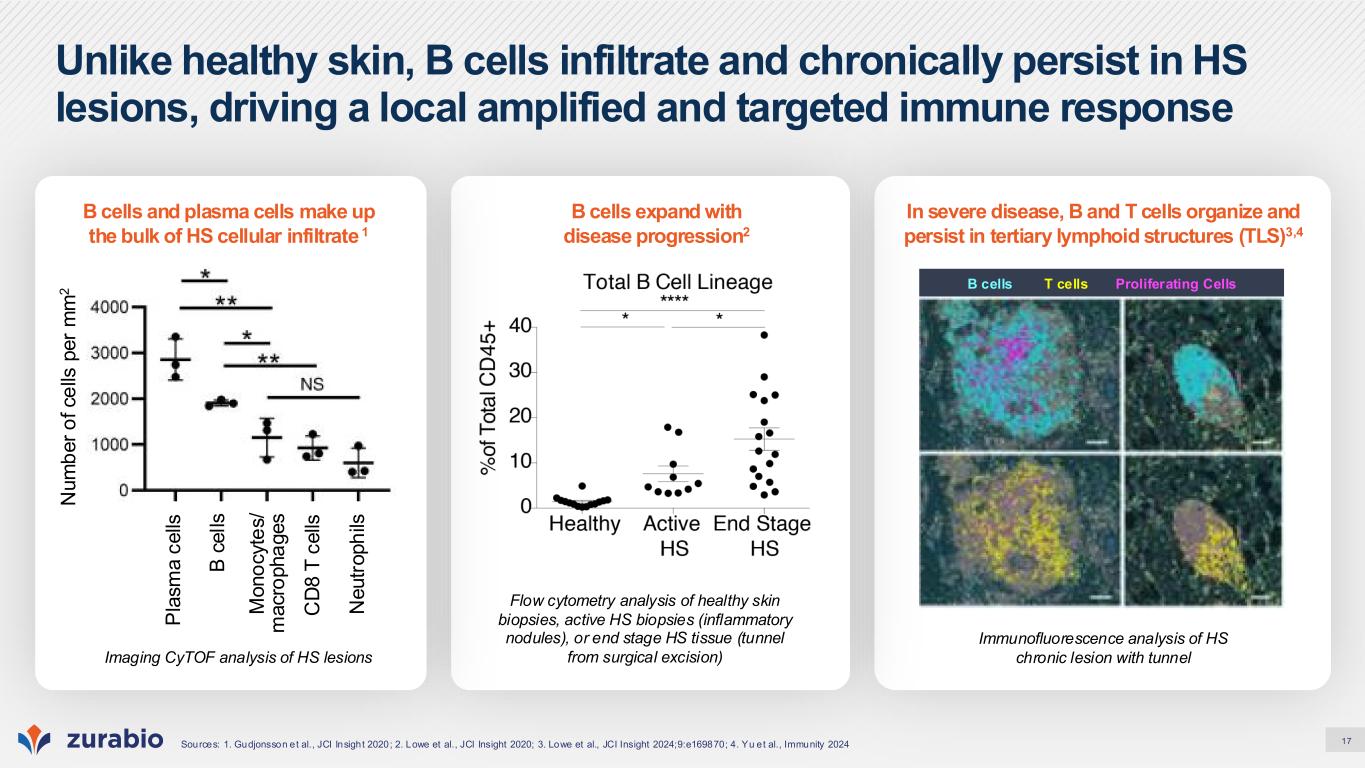
17 Unlike healthy skin, B cells infiltrate and chronically persist in HS lesions, driving a local amplified and targeted immune response Sources: 1. Gudjonsson et al., JCI Insight 2020; 2. Lowe et al., JCI Insight 2020; 3. Lowe et al., JCI Insight 2024;9:e169870; 4. Yu et al., Immunity 2024 In severe disease, B and T cells organize and persist in tertiary lymphoid structures (TLS)3,4 B cells T cells Proliferating Cells Immunofluorescence analysis of HS chronic lesion with tunnel B cells expand with disease progression2 Flow cytometry analysis of healthy skin biopsies, active HS biopsies (inflammatory nodules), or end stage HS tissue (tunnel from surgical excision) B cells and plasma cells make up the bulk of HS cellular infiltrate 1 Imaging CyTOF analysis of HS lesions P la s m a c e lls B c e ll s M o n o c y te s / m a c ro p h a g e s C D 8 T c e lls N e u tr o p h ils N u m b e r o f c e lls p e r m m 2
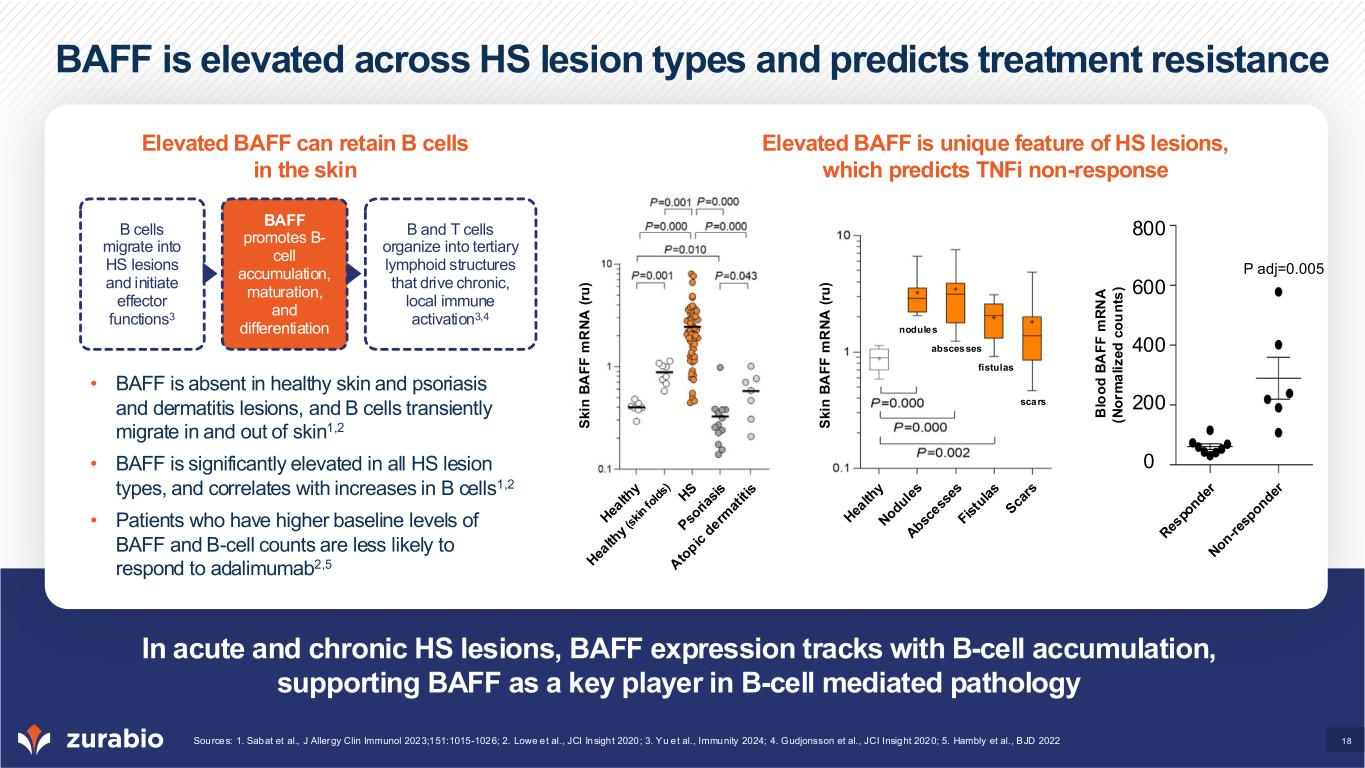
18 BAFF is elevated across HS lesion types and predicts treatment resistance In acute and chronic HS lesions, BAFF expression tracks with B-cell accumulation, supporting BAFF as a key player in B-cell mediated pathology Sources: 1. Sabat et al., J Allergy Clin Immunol 2023;151:1015-1026; 2. Lowe et al., JCI Insight 2020; 3. Yu et al., Immunity 2024; 4. Gudjonsson et al., JCI Insight 2020; 5. Hambly et al., BJD 2022 Elevated BAFF can retain B cells in the skin Elevated BAFF is unique feature of HS lesions, which predicts TNFi non-response • BAFF is absent in healthy skin and psoriasis and dermatitis lesions, and B cells transiently migrate in and out of skin1,2 • BAFF is significantly elevated in all HS lesion types, and correlates with increases in B cells1,2 • Patients who have higher baseline levels of BAFF and B-cell counts are less likely to respond to adalimumab2,5 S k in B A F F m R N A ( ru ) S k in B A F F m R N A ( ru ) B cells migrate into HS lesions and initiate effector functions3 BAFF promotes B- cell accumulation, maturation, and differentiation B and T cells organize into tertiary lymphoid structures that drive chronic, local immune activation3,4 B lo o d B A F F m R N A (N o rm a li z e d c o u n ts ) scars fistulas abscesses nodules P adj=0.005 800 600 400 200 0
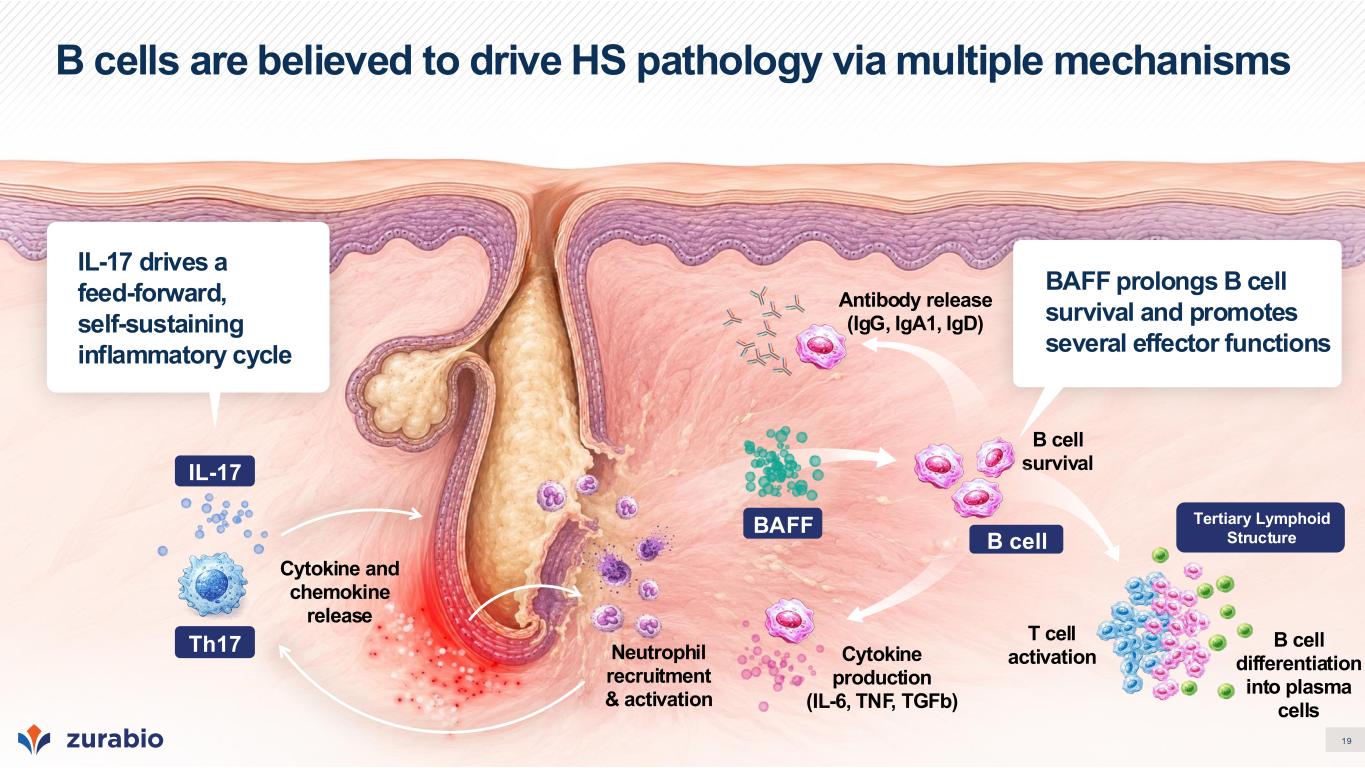
19 B cells are believed to drive HS pathology via multiple mechanisms BAFF prolongs B cell survival and promotes several effector functions IL-17 drives a feed-forward, self-sustaining inflammatory cycle Neutrophil recruitment & activation B cell survival Antibody release (IgG, IgA1, IgD) Cytokine and chemokine release T cell activation B cell differentiation into plasma cells IL-17 Th17 Cytokine production (IL-6, TNF, TGFb) BAFF Tertiary Lymphoid StructureB cell
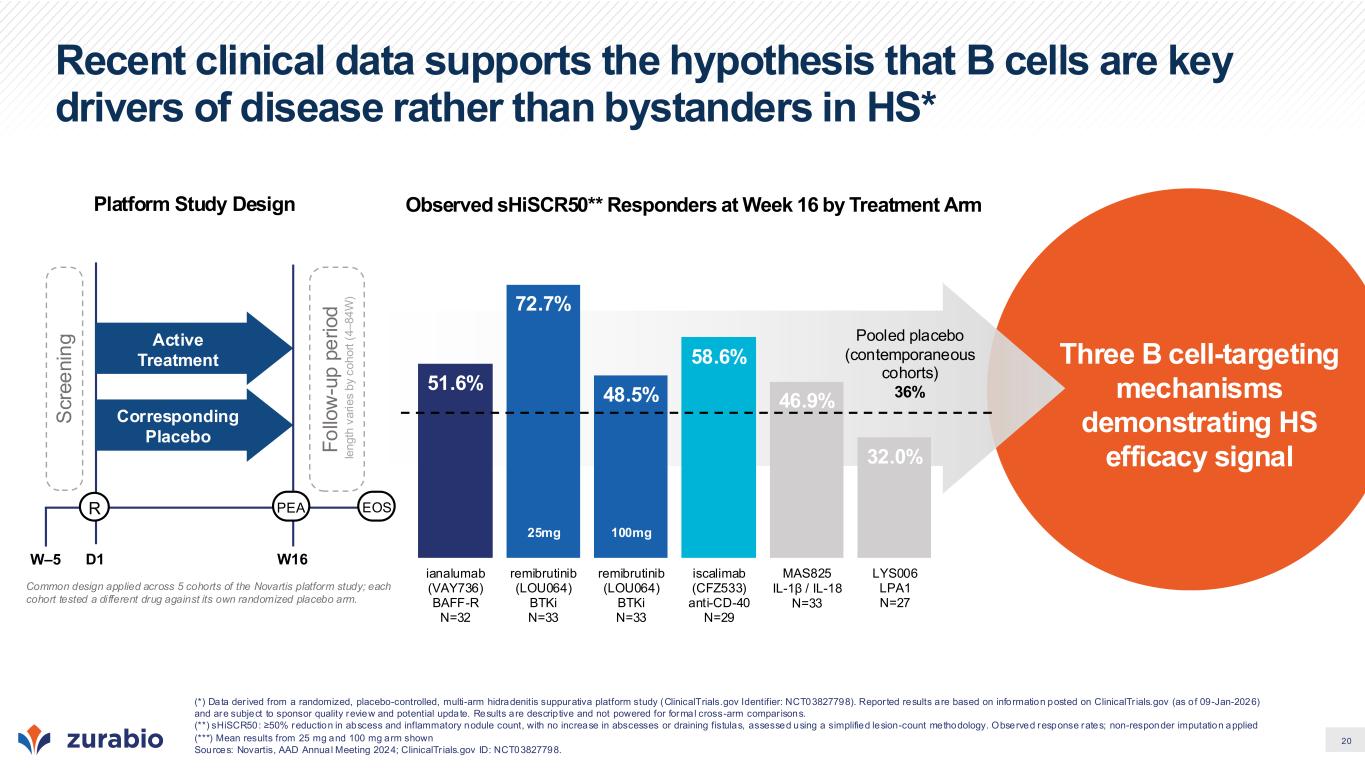
20 Three B cell-targeting mechanisms demonstrating HS efficacy signal Pooled placebo (contemporaneous cohorts) 36% Observed sHiSCR50** Responders at Week 16 by Treatment Arm Recent clinical data supports the hypothesis that B cells are key drivers of disease rather than bystanders in HS* (*) Data der ived from a randomized, placebo-controlled, multi-arm hidradenitis suppurativa platform study (ClinicalTrials.gov Identifier: NCT03827798). Repor ted results are based on information posted on ClinicalTr ials.gov (as of 09-Jan-2026) and are subject to sponsor quality review and potential update. Results are descrip tive and not powered for formal cross-arm compar isons. (**) sHiSCR50: ≥50% reduction in abscess and inflammatory nodule count, with no increase in abscesses or draining fistulas, assessed using a simplified lesion-count methodology. Observed response rates; non-responder imputation applied (***) Mean results from 25 mg and 100 mg arm shown Sources: Novartis, AAD Annual Meeting 2024; ClinicalTr ials.gov ID: NCT03827798. R W–5 D1 S c re e n in g Active Treatment Corresponding Placebo W16 F o llo w -u p p e ri o d le n g th v a ri e s b y c o h o rt ( 4 – 8 4 W ) PEA EOS Common design applied across 5 cohorts of the Novartis platform study; each cohort tested a different drug against its own randomized placebo arm. Platform Study Design 51.6% 72.7% 48.5% 58.6% 46.9% 32.0% ianalumab (VAY736) BAFF-R N=32 remibrutinib (LOU064) BTKi N=33 remibrutinib (LOU064) BTKi N=33 iscalimab (CFZ533) anti-CD-40 N=29 MAS825 IL-1β / IL-18 N=33 LYS006 LPA1 N=27 25mg 100mg
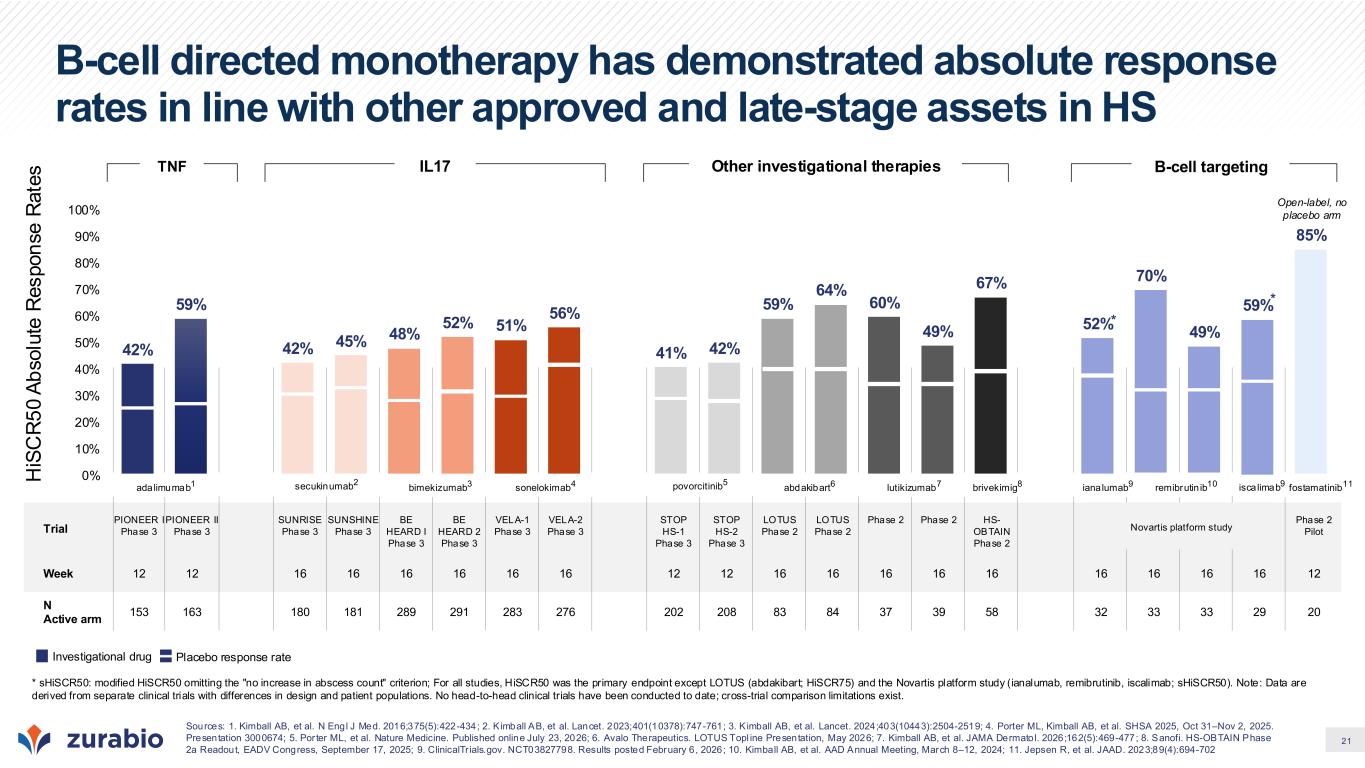
21 Trial PIONEER I Phase 3 PIONEER II Phase 3 SUNRISE Phase 3 SUNSHINE Phase 3 BE HEARD I Phase 3 BE HEARD 2 Phase 3 VELA-1 Phase 3 VELA-2 Phase 3 STOP HS-1 Phase 3 STOP HS-2 Phase 3 LOTUS Phase 2 LOTUS Phase 2 Phase 2 Phase 2 HS- OBTAIN Phase 2 Phase 2 Pilot Week 12 12 16 16 16 16 16 16 12 12 16 16 16 16 16 16 16 16 16 12 N Active arm 153 163 180 181 289 291 283 276 202 208 83 84 37 39 58 32 33 33 29 20 B-cell directed monotherapy has demonstrated absolute response rates in line with other approved and late-stage assets in HS 42% 59% 42% 45% 48% 52% 51% 56% 41% 42% 59% 64% 60% 49% 67% 52% 70% 49% 59% 85% 0% 10% 20% 30% 40% 50% 60% 70% 80% 90% 100% * * H iS C R 5 0 A b s o lu te R e s p o n s e R a te s secukinumab2 adalimumab1 bimekizumab3 sonelokimab4 povorcitinib5 Novartis platform study lutikizumab7abdakibart6 remibrutin ibbrivekimig8 ianalumab9 re ibrutin ib10 fostamatinib11isca limab9 Sources: 1. Kimball AB, et al. N Engl J Med. 2016;375(5):422-434; 2. K imball AB, et al. Lancet. 2023;401(10378):747-761; 3. K imball AB, et al. Lancet. 2024;403(10443):2504-2519; 4. Porter ML, Kimball AB, et al. SHSA 2025, Oct 31–Nov 2, 2025. Presentation 3000674; 5. Por ter ML, et al. Nature Medicine. Published online July 23, 2026; 6. Avalo Therapeutics. LOTUS Topl ine Presentation, May 2026; 7. Kimball AB, et al. JAMA Dermatol. 2026;162(5):469-477; 8. Sanofi. HS-OBTAIN Phase 2a Readout, EADV Congress, September 17, 2025; 9. ClinicalTr ials.gov. NCT03827798. Results posted February 6, 2026; 10. Kimball AB, et al. AAD Annual Meeting, March 8–12, 2024; 11. Jepsen R, et al. JAAD. 2023;89(4):694-702 Open-label, no placebo arm TNF IL17 Other investigational therapies B-cell targeting * sHiSCR50: modified HiSCR50 omitting the "no increase in abscess count" criterion; For all studies, HiSCR50 was the primary endpoint except LOTUS (abdakibart; HiSCR75) and the Novartis platform study (ianalumab, remibrutinib, iscalimab; sHiSCR50). Note: Data are derived from separate clinical trials with differences in design and patient populations. No head-to-head clinical trials have been conducted to date; cross-trial comparison limitations exist. Investigational drug Placebo response rate
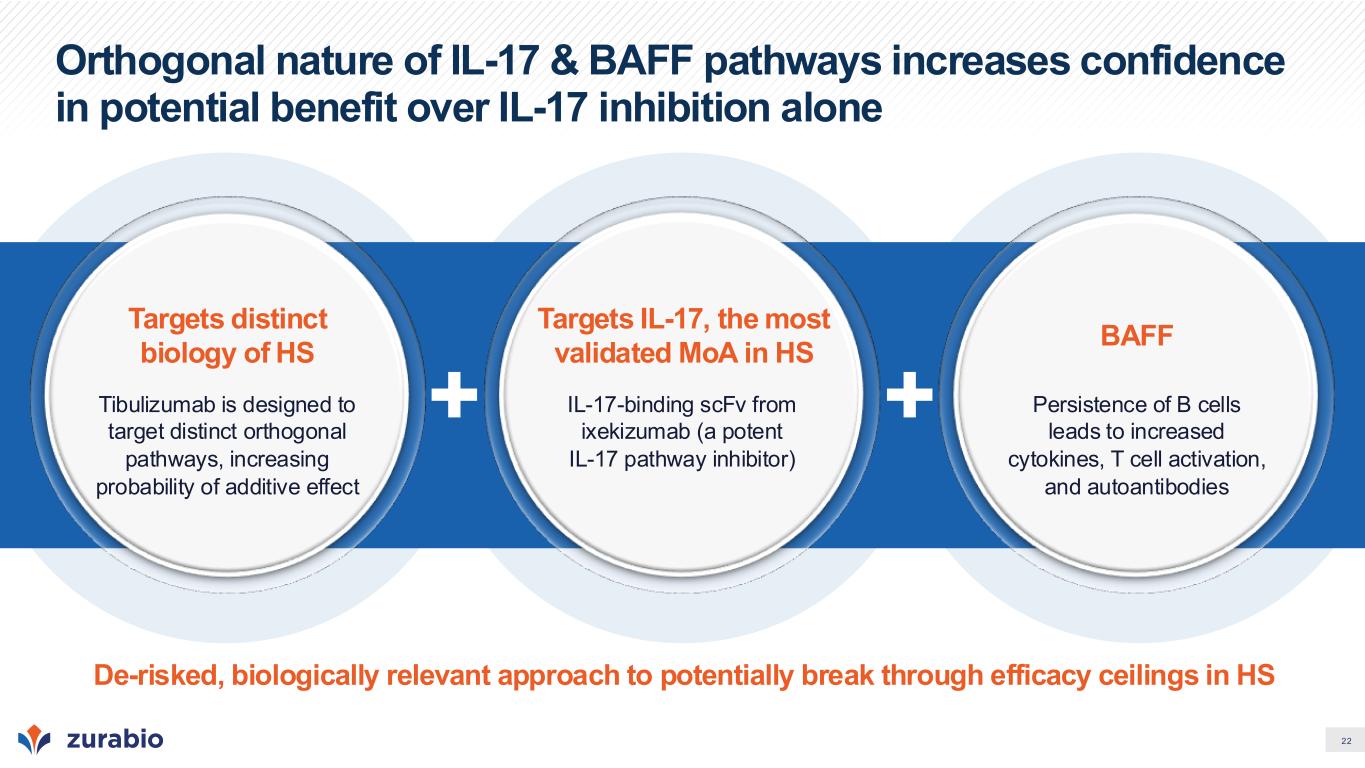
22 Orthogonal nature of IL-17 & BAFF pathways increases confidence in potential benefit over IL-17 inhibition alone Targets distinct biology of HS Tibulizumab is designed to target distinct orthogonal pathways, increasing probability of additive effect Targets IL-17, the most validated MoA in HS IL-17-binding scFv from ixekizumab (a potent IL-17 pathway inhibitor) BAFF Persistence of B cells leads to increased cytokines, T cell activation, and autoantibodies De-risked, biologically relevant approach to potentially break through efficacy ceilings in HS
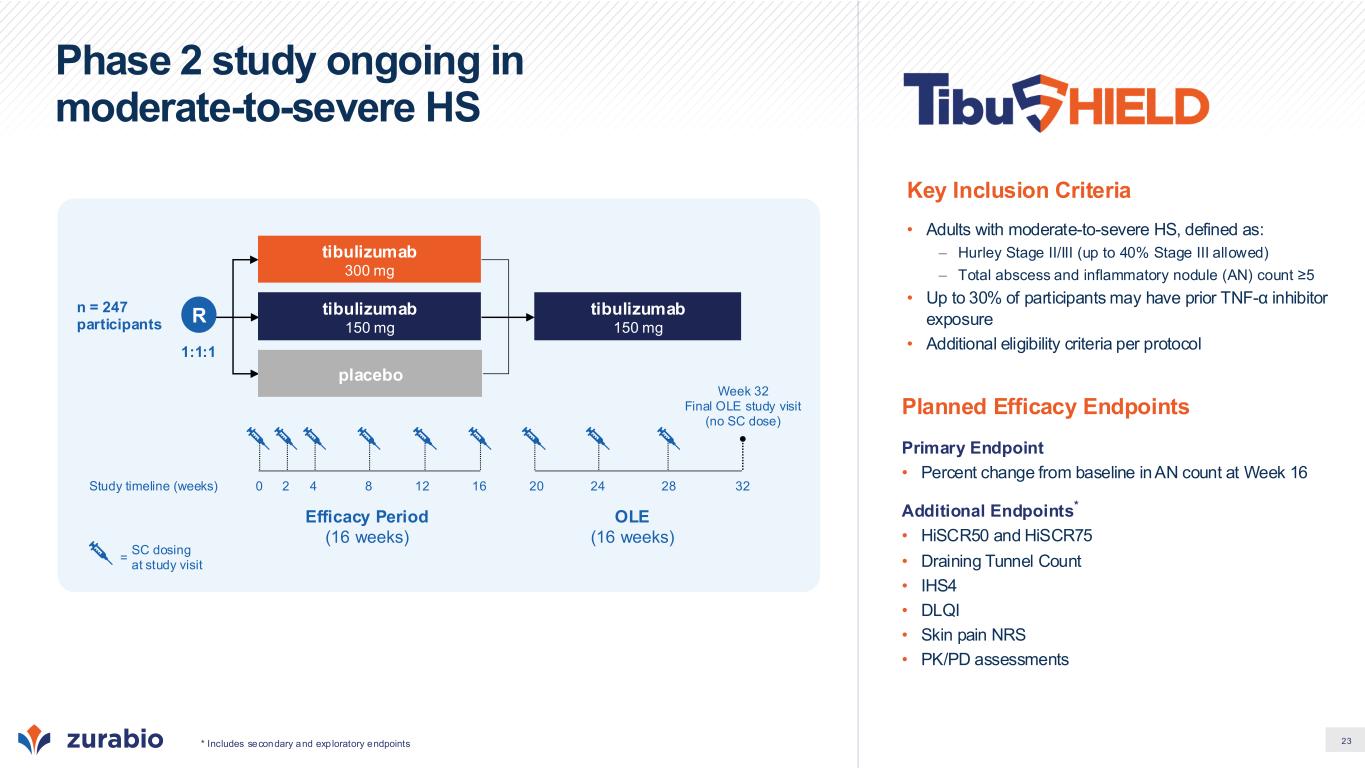
23 Phase 2 study ongoing in moderate-to-severe HS Planned Efficacy Endpoints Primary Endpoint • Percent change from baseline in AN count at Week 16 Additional Endpoints* • HiSCR50 and HiSCR75 • Draining Tunnel Count • IHS4 • DLQI • Skin pain NRS • PK/PD assessments Key Inclusion Criteria • Adults with moderate-to-severe HS, defined as: – Hurley Stage II/III (up to 40% Stage III allowed) – Total abscess and inflammatory nodule (AN) count ≥5 • Up to 30% of participants may have prior TNF-α inhibitor exposure • Additional eligibility criteria per protocol Efficacy Period (16 weeks) OLE (16 weeks) Study timeline (weeks) 1:1:1 tibulizumab 150 mg placebo n = 247 participants tibulizumab 300 mg tibulizumab 150 mg 2 4 8 12 160 20 24 28 32 Week 32 Final OLE study visit (no SC dose) SC dosing at study visit = * Includes secondary and exploratory endpoints R
24 Systemic Sclerosis (SSc)
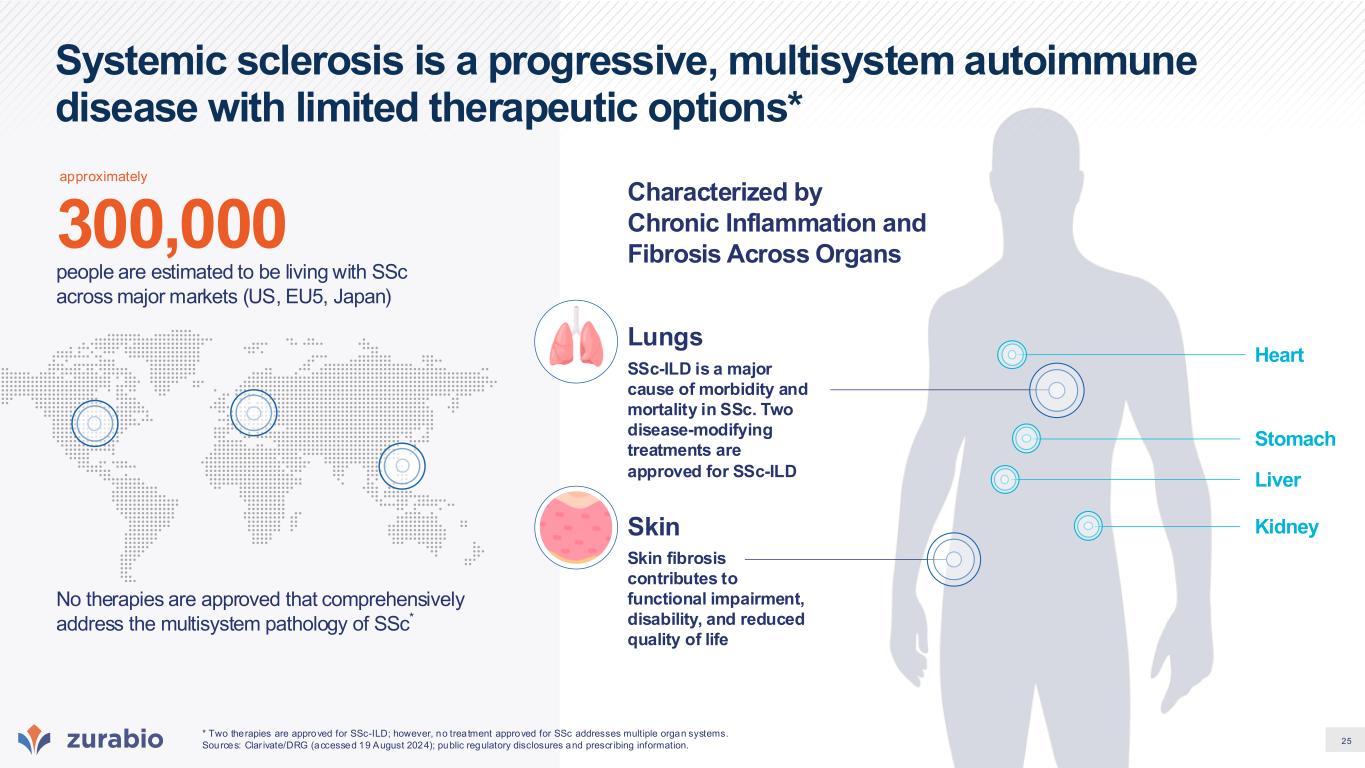
25 Systemic sclerosis is a progressive, multisystem autoimmune disease with limited therapeutic options* No therapies are approved that comprehensively address the multisystem pathology of SSc* 300,000 people are estimated to be living with SSc across major markets (US, EU5, Japan) SSc-ILD is a major cause of morbidity and mortality in SSc. Two disease-modifying treatments are approved for SSc-ILD Lungs Skin Characterized by Chronic Inflammation and Fibrosis Across Organs Skin fibrosis contributes to functional impairment, disability, and reduced quality of life * Two therapies are approved for SSc-ILD; however, no treatment approved for SSc addresses multiple organ systems. Sources: Clar ivate/DRG (accessed 19 August 2024); public regulatory disclosures and prescr ibing information. Heart Kidney Liver Stomach approximately
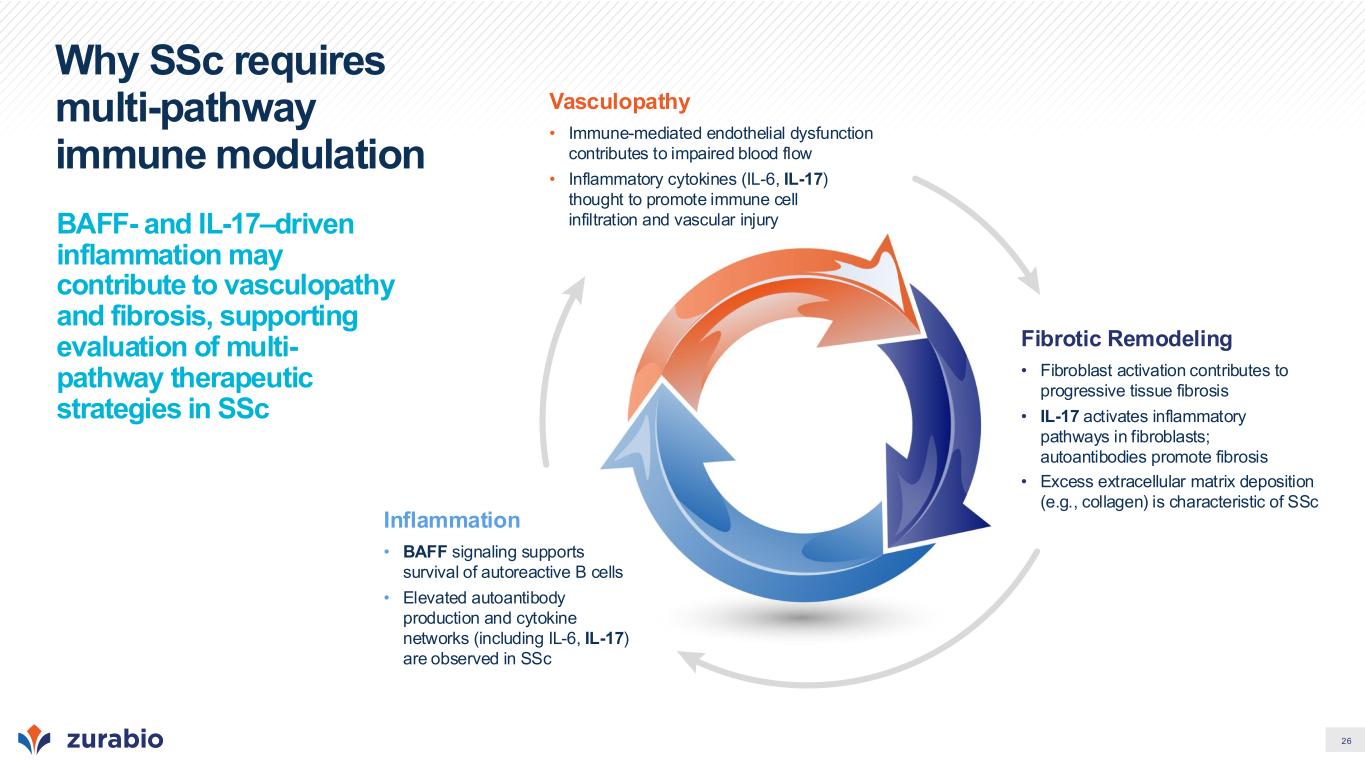
26 Why SSc requires multi-pathway immune modulation BAFF- and IL-17–driven inflammation may contribute to vasculopathy and fibrosis, supporting evaluation of multi- pathway therapeutic strategies in SSc Vasculopathy • Immune-mediated endothelial dysfunction contributes to impaired blood flow • Inflammatory cytokines (IL-6, IL-17) thought to promote immune cell infiltration and vascular injury Inflammation • BAFF signaling supports survival of autoreactive B cells • Elevated autoantibody production and cytokine networks (including IL-6, IL-17) are observed in SSc Fibrotic Remodeling • Fibroblast activation contributes to progressive tissue fibrosis • IL-17 activates inflammatory pathways in fibroblasts; autoantibodies promote fibrosis • Excess extracellular matrix deposition (e.g., collagen) is characteristic of SSc
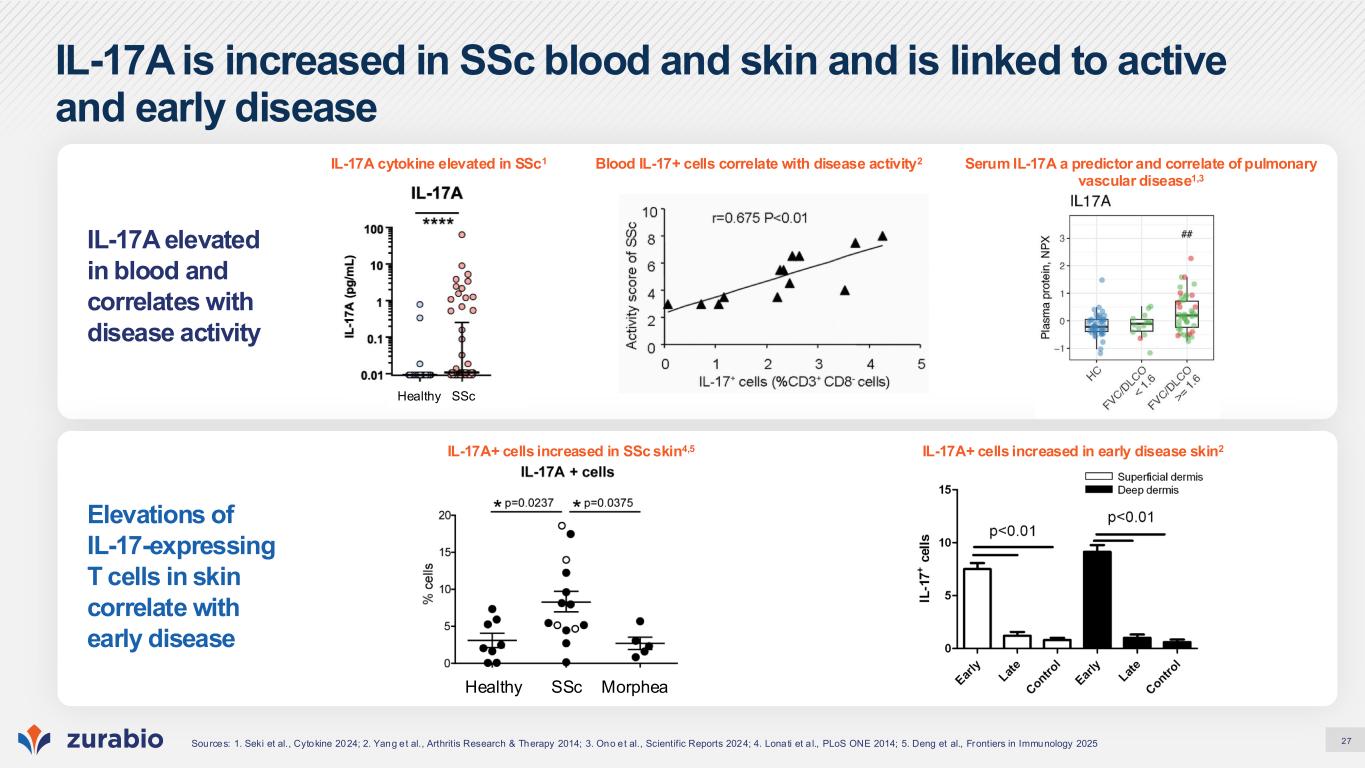
27 IL-17A is increased in SSc blood and skin and is linked to active and early disease IL-17A elevated in blood and correlates with disease activity Elevations of IL-17-expressing T cells in skin correlate with early disease IL-17A cytokine elevated in SSc1 Serum IL-17A a predictor and correlate of pulmonary vascular disease1,3 Blood IL-17+ cells correlate with disease activity2 IL-17A+ cells increased in SSc skin4,5 IL-17A+ cells increased in early disease skin2 Sources: 1. Seki et al., Cytokine 2024; 2. Yang et al., Arthritis Research & Therapy 2014; 3. Ono et al., Scientific Reports 2024; 4. Lonati et a l., PLoS ONE 2014; 5. Deng et al., Frontiers in Immunology 2025 Healthy SSc Morphea Healthy SSc
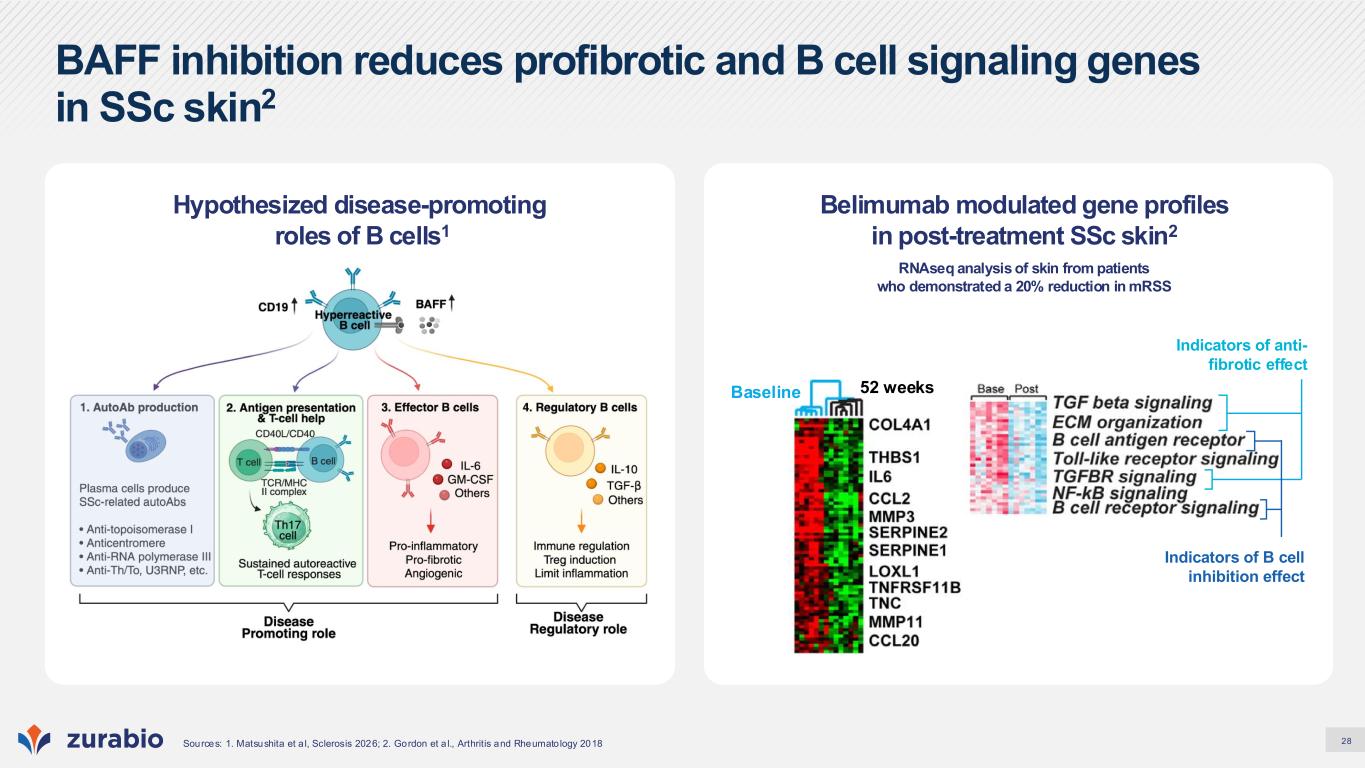
28 BAFF inhibition reduces profibrotic and B cell signaling genes in SSc skin2 Sources: 1. Matsushita et a l, Sclerosis 2026; 2. Gordon et a l., Arthritis and Rheumato logy 2018 Belimumab modulated gene profiles in post-treatment SSc skin2 RNAseq analysis of skin from patients who demonstrated a 20% reduction in mRSS Hypothesized disease-promoting roles of B cells1 Baseline 52 weeks Indicators of anti- fibrotic effect Indicators of B cell inhibition effect
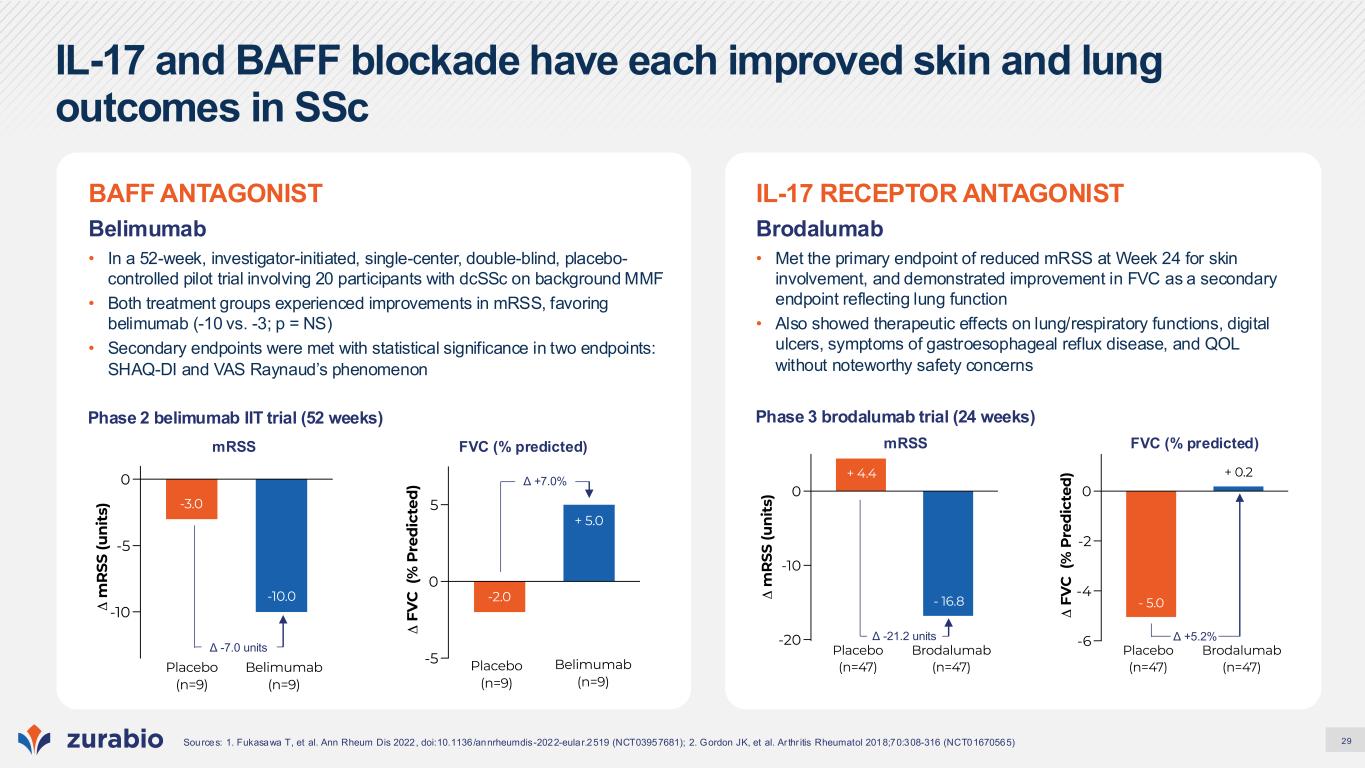
29 IL-17 and BAFF blockade have each improved skin and lung outcomes in SSc Sources: 1. Fukasawa T, et al. Ann Rheum Dis 2022, doi:10.1136/annrheumdis-2022-eular.2519 (NCT03957681); 2. Gordon JK, et al. Ar thr itis Rheumatol 2018;70:308-316 (NCT01670565) IL-17 RECEPTOR ANTAGONIST Brodalumab • Met the primary endpoint of reduced mRSS at Week 24 for skin involvement, and demonstrated improvement in FVC as a secondary endpoint reflecting lung function • Also showed therapeutic effects on lung/respiratory functions, digital ulcers, symptoms of gastroesophageal reflux disease, and QOL without noteworthy safety concerns Phase 3 brodalumab trial (24 weeks) Δ +5.2%Δ -21.2 units mRSS FVC (% predicted) BAFF ANTAGONIST Belimumab • In a 52-week, investigator-initiated, single-center, double-blind, placebo- controlled pilot trial involving 20 participants with dcSSc on background MMF • Both treatment groups experienced improvements in mRSS, favoring belimumab (-10 vs. -3; p = NS) • Secondary endpoints were met with statistical significance in two endpoints: SHAQ-DI and VAS Raynaud’s phenomenon Phase 2 belimumab IIT trial (52 weeks) mRSS Δ -7.0 units FVC (% predicted) Δ +7.0%
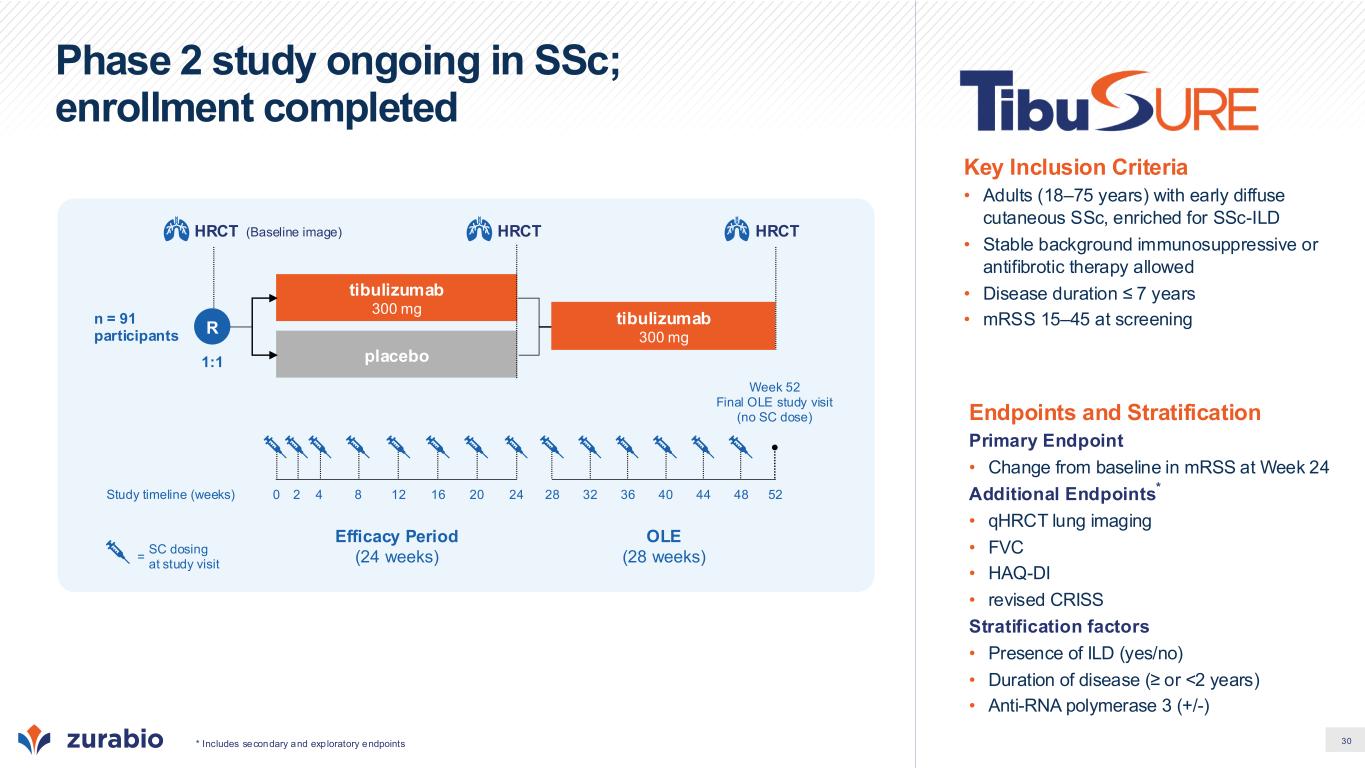
30 Phase 2 study ongoing in SSc; enrollment completed * Includes secondary and exploratory endpoints Endpoints and Stratification Primary Endpoint • Change from baseline in mRSS at Week 24 Additional Endpoints * • qHRCT lung imaging • FVC • HAQ-DI • revised CRISS Stratification factors • Presence of ILD (yes/no) • Duration of disease (≥ or <2 years) • Anti-RNA polymerase 3 (+/-) Key Inclusion Criteria • Adults (18–75 years) with early diffuse cutaneous SSc, enriched for SSc-ILD • Stable background immunosuppressive or antifibrotic therapy allowed • Disease duration ≤ 7 years • mRSS 15–45 at screening Efficacy Period (24 weeks) OLE (28 weeks) 1:1 tibulizumab 300 mg placebo n = 91 participants tibulizumab 300 mg SC dosing at study visit = Study timeline (weeks) 0 52 Week 52 Final OLE study visit (no SC dose) 2 4 8 12 16 28 36 4420 24 32 40 48 (Baseline image) HRCT R HRCTHRCT
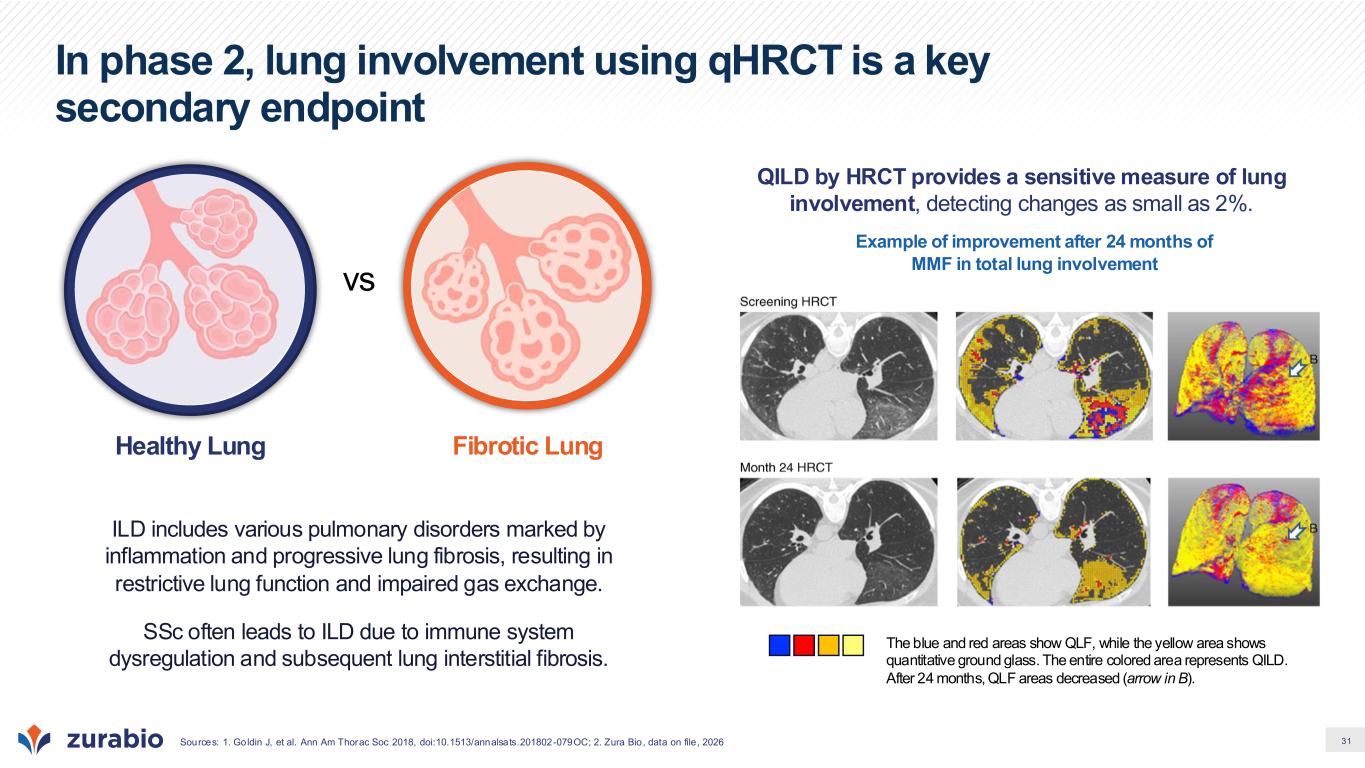
31 In phase 2, lung involvement using qHRCT is a key secondary endpoint Sources: 1. Goldin J, et al. Ann Am Thorac Soc 2018, doi:10.1513/annalsats.201802-079OC; 2. Zura Bio, data on file , 2026 ILD includes various pulmonary disorders marked by inflammation and progressive lung fibrosis, resulting in restrictive lung function and impaired gas exchange. SSc often leads to ILD due to immune system dysregulation and subsequent lung interstitial fibrosis. vs Healthy Lung Fibrotic Lung QILD by HRCT provides a sensitive measure of lung involvement, detecting changes as small as 2%. Example of improvement after 24 months of MMF in total lung involvement The blue and red areas show QLF, while the yellow area shows quantitative ground glass. The entire colored area represents QILD. After 24 months, QLF areas decreased (arrow in B).
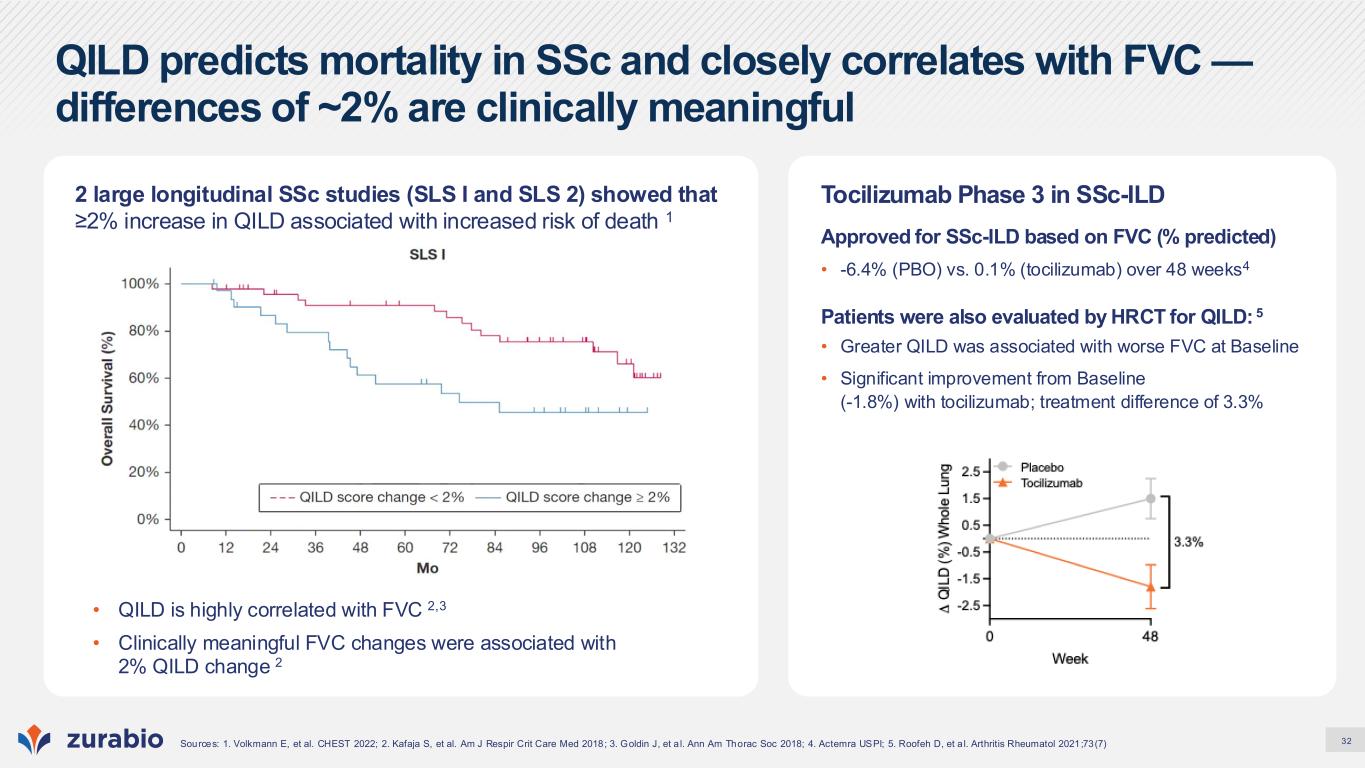
32 QILD predicts mortality in SSc and closely correlates with FVC — differences of ~2% are clinically meaningful Sources: 1. Volkmann E, et al. CHEST 2022; 2. Kafaja S, et al. Am J Respir Crit Care Med 2018; 3. Goldin J, et a l. Ann Am Thorac Soc 2018; 4. Actemra USPI; 5. Roofeh D, et a l. Arthritis Rheumatol 2021;73(7) 2 large longitudinal SSc studies (SLS I and SLS 2) showed that ≥2% increase in QILD associated with increased risk of death 1 Tocilizumab Phase 3 in SSc-ILD Approved for SSc-ILD based on FVC (% predicted) • -6.4% (PBO) vs. 0.1% (tocilizumab) over 48 weeks4 Patients were also evaluated by HRCT for QILD: 5 • Greater QILD was associated with worse FVC at Baseline • Significant improvement from Baseline (-1.8%) with tocilizumab; treatment difference of 3.3% • QILD is highly correlated with FVC 2,3 • Clinically meaningful FVC changes were associated with 2% QILD change 2
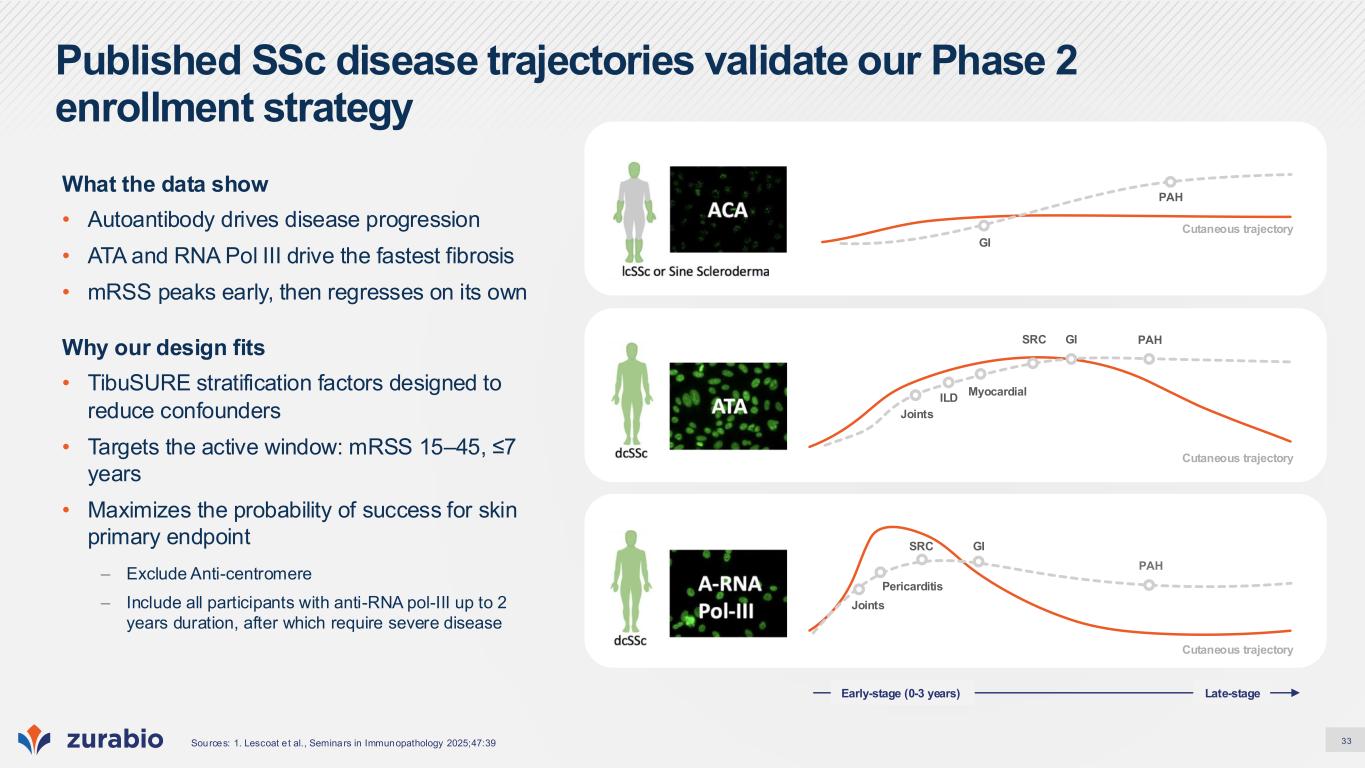
33 Published SSc disease trajectories validate our Phase 2 enrollment strategy What the data show • Autoantibody drives disease progression • ATA and RNA Pol III drive the fastest fibrosis • mRSS peaks early, then regresses on its own Why our design fits • TibuSURE stratification factors designed to reduce confounders • Targets the active window: mRSS 15–45, ≤7 years • Maximizes the probability of success for skin primary endpoint – Exclude Anti-centromere – Include all participants with anti-RNA pol-III up to 2 years duration, after which require severe disease Sources: 1. Lescoat e t al., Seminars in Immunopathology 2025;47:39 Cutaneous trajectory GI PAH Cutaneous trajectory PAHGISRC Myocardial ILD Joints Cutaneous trajectory PAH GISRC Joints Pericarditis Late-stageEarly-stage (0-3 years)
34 Polymyalgia Rheumatica (PMR)
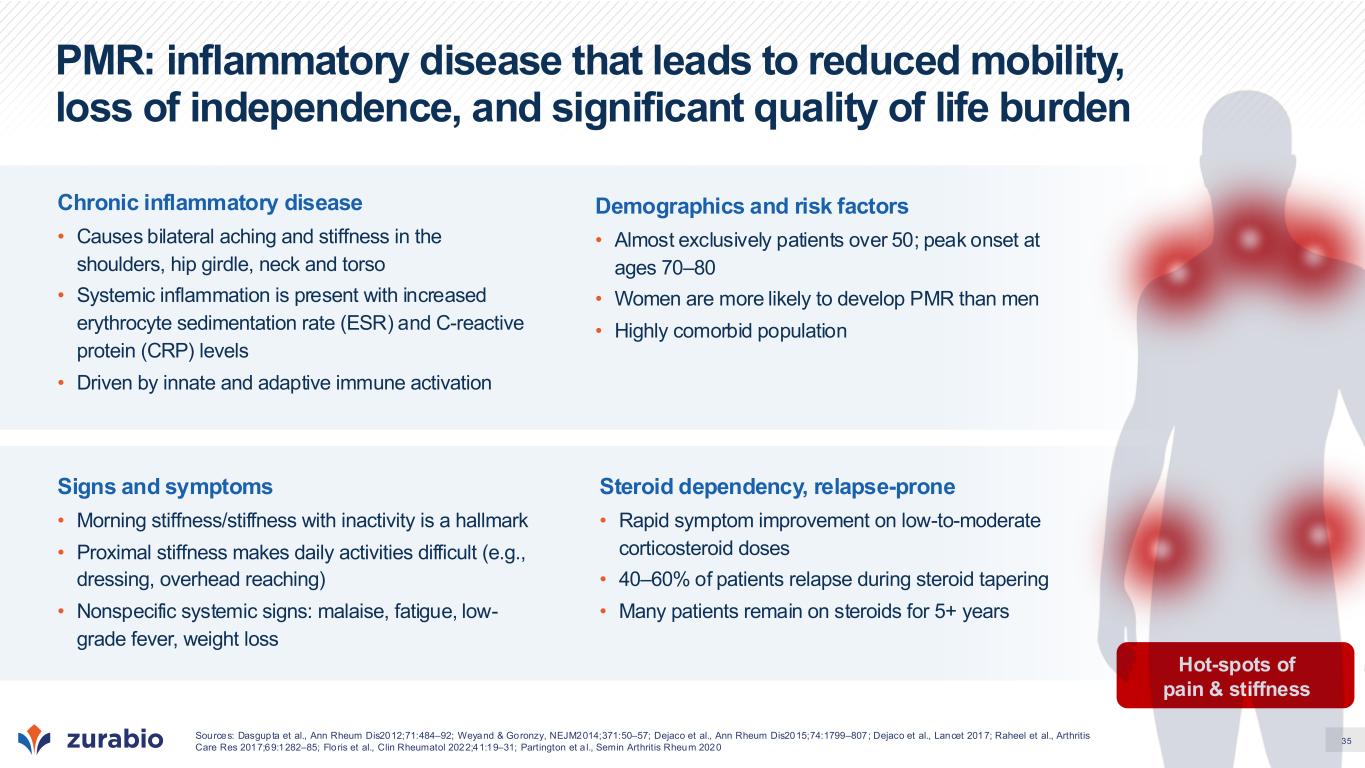
35 PMR: inflammatory disease that leads to reduced mobility, loss of independence, and significant quality of life burden Hot-spots of pain & stiffness Chronic inflammatory disease • Causes bilateral aching and stiffness in the shoulders, hip girdle, neck and torso • Systemic inflammation is present with increased erythrocyte sedimentation rate (ESR) and C-reactive protein (CRP) levels • Driven by innate and adaptive immune activation Demographics and risk factors • Almost exclusively patients over 50; peak onset at ages 70–80 • Women are more likely to develop PMR than men • Highly comorbid population Signs and symptoms • Morning stiffness/stiffness with inactivity is a hallmark • Proximal stiffness makes daily activities difficult (e.g., dressing, overhead reaching) • Nonspecific systemic signs: malaise, fatigue, low- grade fever, weight loss Steroid dependency, relapse-prone • Rapid symptom improvement on low-to-moderate corticosteroid doses • 40–60% of patients relapse during steroid tapering • Many patients remain on steroids for 5+ years Sources: Dasgupta et al., Ann Rheum Dis2012;71:484–92; Weyand & Goronzy, NEJM2014;371:50–57; Dejaco et al., Ann Rheum Dis2015;74:1799–807; Dejaco et al., Lancet 2017; Raheel et al., Arthritis Care Res 2017;69:1282–85; Floris et al., Clin Rheumatol 2022;41:19–31; Partington et a l., Semin Arthritis Rheum 2020
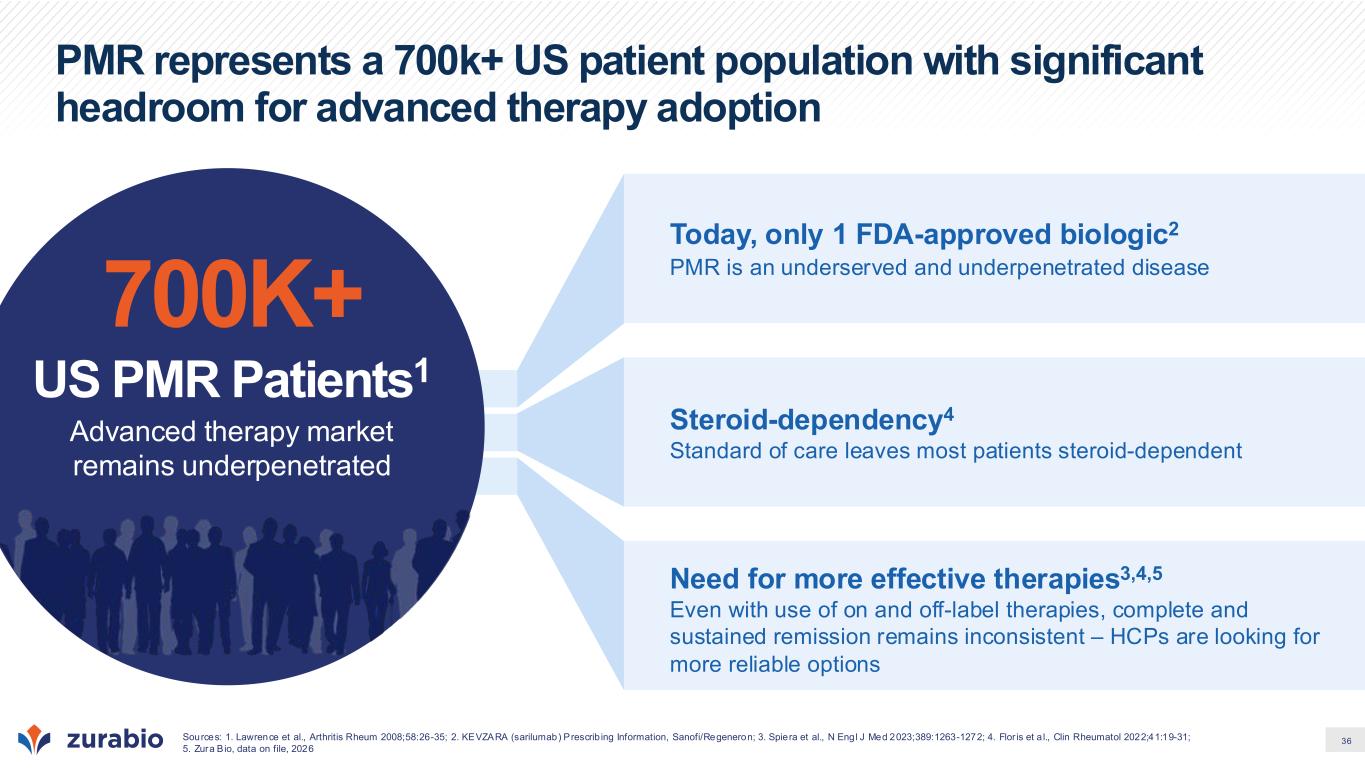
36 PMR represents a 700k+ US patient population with significant headroom for advanced therapy adoption Today, only 1 FDA-approved biologic2 PMR is an underserved and underpenetrated disease Need for more effective therapies3,4,5 Even with use of on and off-label therapies, complete and sustained remission remains inconsistent – HCPs are looking for more reliable options Steroid-dependency4 Standard of care leaves most patients steroid-dependent 700K+ US PMR Patients1 Advanced therapy market remains underpenetrated Sources: 1. Lawrence et al., Arthritis Rheum 2008;58:26-35; 2. KEVZARA (sarilumab) Prescrib ing Information, Sanofi/Regeneron; 3. Spiera et al., N Engl J Med 2023;389:1263-1272; 4. Flor is et a l., Clin Rheumatol 2022;41:19-31; 5. Zura Bio, data on file, 2026
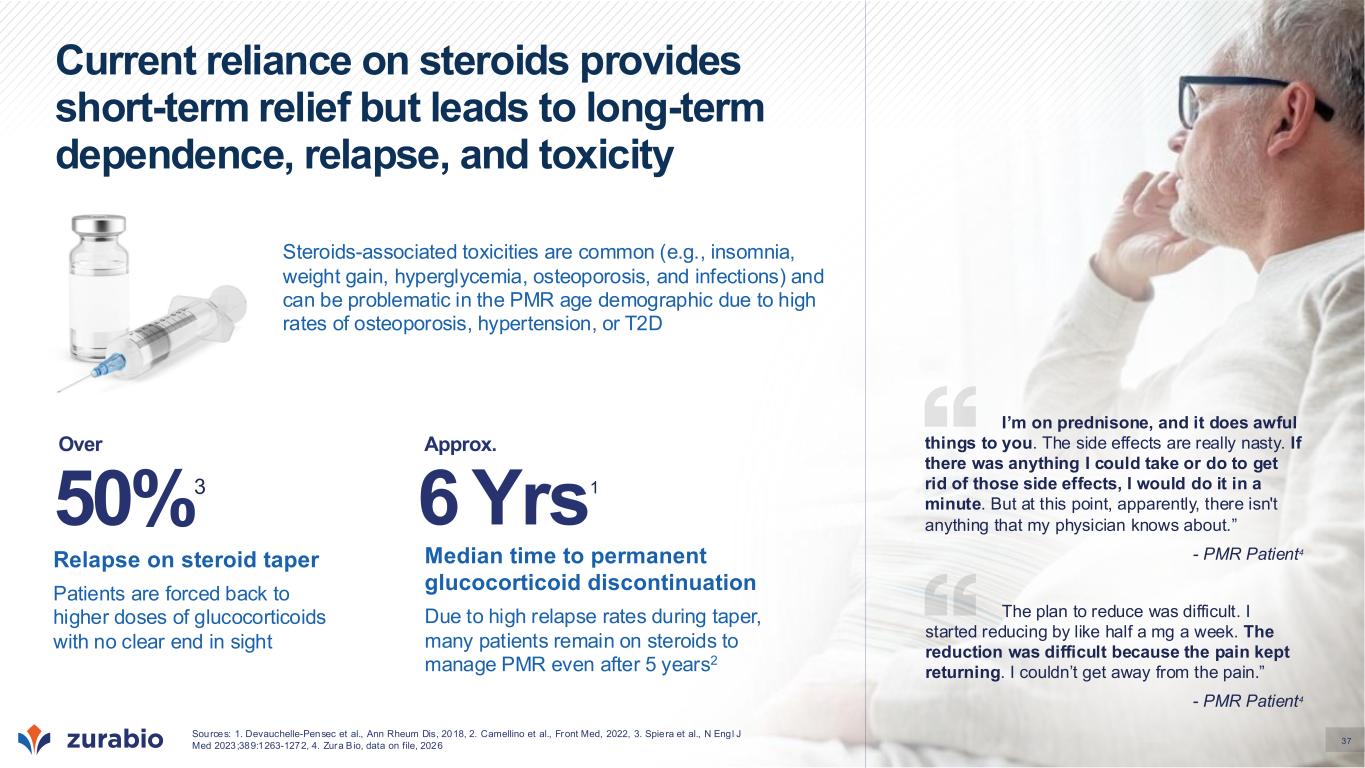
37 Current reliance on steroids provides short-term relief but leads to long-term dependence, relapse, and toxicity Steroids-associated toxicities are common (e.g., insomnia, weight gain, hyperglycemia, osteoporosis, and infections) and can be problematic in the PMR age demographic due to high rates of osteoporosis, hypertension, or T2D Median time to permanent glucocorticoid discontinuation Due to high relapse rates during taper, many patients remain on steroids to manage PMR even after 5 years2 Relapse on steroid taper Patients are forced back to higher doses of glucocorticoids with no clear end in sight 50%3 The plan to reduce was difficult. I started reducing by like half a mg a week. The reduction was difficult because the pain kept returning. I couldn’t get away from the pain.” - PMR Patient4 I’m on prednisone, and it does awful things to you. The side effects are really nasty. If there was anything I could take or do to get rid of those side effects, I would do it in a minute. But at this point, apparently, there isn't anything that my physician knows about.” - PMR Patient4 Sources: 1. Devauchelle-Pensec et al., Ann Rheum Dis, 2018, 2. Camellino et al., Front Med, 2022, 3. Spiera et al., N Engl J Med 2023;389:1263-1272, 4. Zura Bio, data on file, 2026 Over 6 Yrs1 Approx.
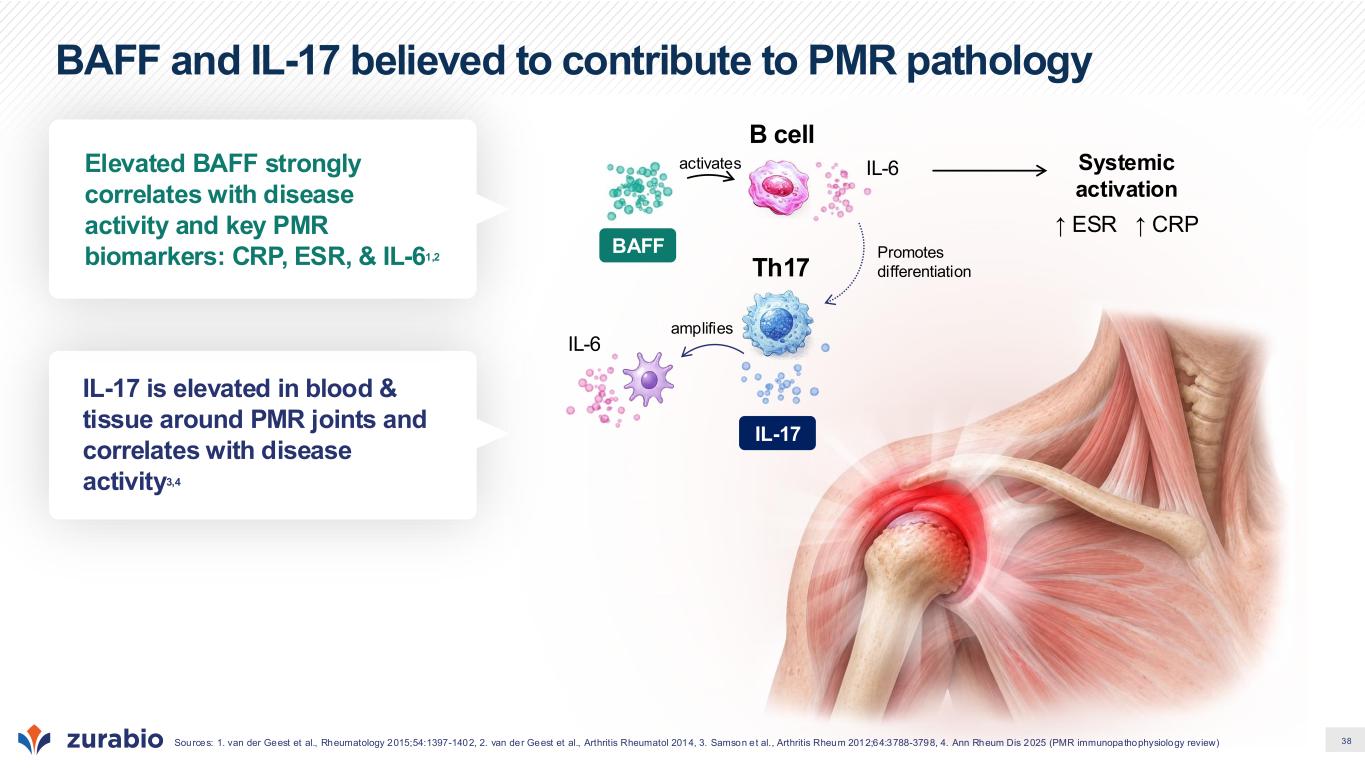
38 BAFF and IL-17 believed to contribute to PMR pathology IL-17 is elevated in blood & tissue around PMR joints and correlates with disease activity3,4 IL-17 BAFF B cell Th17 IL-6 IL-6 activates Promotes differentiation amplifies Elevated BAFF strongly correlates with disease activity and key PMR biomarkers: CRP, ESR, & IL-61,2 Systemic activation ↑ ESR ↑ CRP Sources: 1. van der Geest et al., Rheumatology 2015;54:1397-1402, 2. van der Geest et al., Arthritis Rheumatol 2014, 3. Samson et al., Arthritis Rheum 2012;64:3788-3798, 4. Ann Rheum Dis 2025 (PMR immunopathophysiology review)
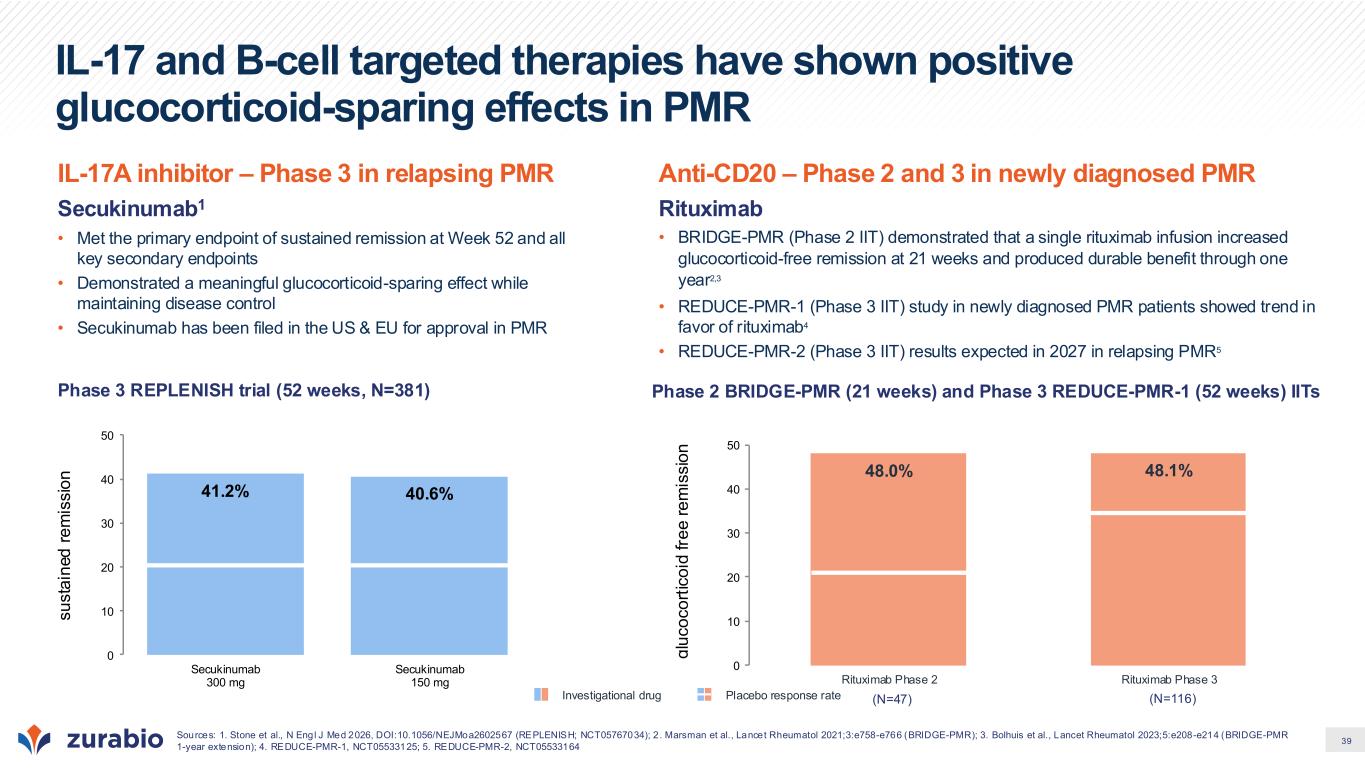
39 IL-17 and B-cell targeted therapies have shown positive glucocorticoid-sparing effects in PMR Sources: 1. Stone et al., N Engl J Med 2026, DOI:10.1056/NEJMoa2602567 (REPLENISH; NCT05767034); 2 . Marsman et al., Lancet Rheumatol 2021;3:e758-e766 (BRIDGE-PMR); 3. Bolhuis et al., Lancet Rheumatol 2023;5:e208-e214 (BRIDGE-PMR 1-year extension); 4. REDUCE-PMR-1, NCT05533125; 5. REDUCE-PMR-2, NCT05533164 IL-17A inhibitor – Phase 3 in relapsing PMR Secukinumab1 • Met the primary endpoint of sustained remission at Week 52 and all key secondary endpoints • Demonstrated a meaningful glucocorticoid-sparing effect while maintaining disease control • Secukinumab has been filed in the US & EU for approval in PMR Phase 3 REPLENISH trial (52 weeks, N=381) Anti-CD20 – Phase 2 and 3 in newly diagnosed PMR Rituximab • BRIDGE-PMR (Phase 2 IIT) demonstrated that a single rituximab infusion increased glucocorticoid-free remission at 21 weeks and produced durable benefit through one year2,3 • REDUCE-PMR-1 (Phase 3 IIT) study in newly diagnosed PMR patients showed trend in favor of rituximab4 • REDUCE-PMR-2 (Phase 3 IIT) results expected in 2027 in relapsing PMR5 Phase 2 BRIDGE-PMR (21 weeks) and Phase 3 REDUCE-PMR-1 (52 weeks) IITs 41.2% 40.6% 0 10 20 30 40 50 Secukinumab 300 mg Secukinumab 150 mg g lu c o c o rt ic o id f re e r e m is s io n s u s ta in e d r e m is s io n Investigational drug Placebo response rate 48.0% 48.1% 0 10 20 30 40 50 Rituximab Phase 2 Rituximab Phase 3 (N=47) (N=116)
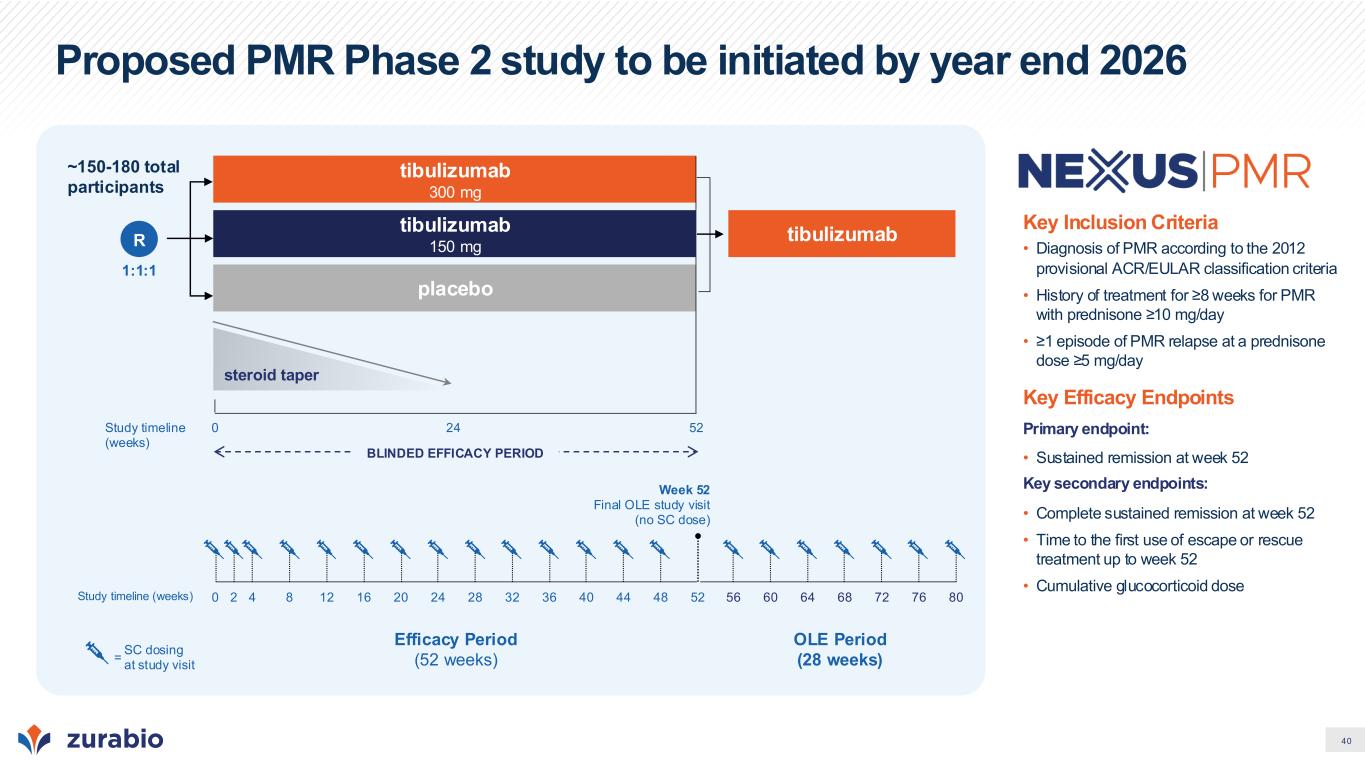
40 Proposed PMR Phase 2 study to be initiated by year end 2026 Key Inclusion Criteria • Diagnosis of PMR according to the 2012 provisional ACR/EULAR classification criteria • History of treatment for ≥8 weeks for PMR with prednisone ≥10 mg/day • ≥1 episode of PMR relapse at a prednisone dose ≥5 mg/day Key Efficacy Endpoints Primary endpoint: • Sustained remission at week 52 Key secondary endpoints: • Complete sustained remission at week 52 • Time to the first use of escape or rescue treatment up to week 52 • Cumulative glucocorticoid dose tibulizumab 300 mg 1:1:1 R steroid taper placebo Study timeline (weeks) 0 5224 BLINDED EFFICACY PERIOD tibulizumab 150 mg ~150-180 total participants Efficacy Period (52 weeks) SC dosing at study visit = Study timeline (weeks) 0 52 Week 52 Final OLE study visit (no SC dose) 2 4 8 12 16 28 36 4420 24 32 40 48 56 60 64 68 8072 76 OLE Period (28 weeks) tibulizumab

41 Summary & Milestones
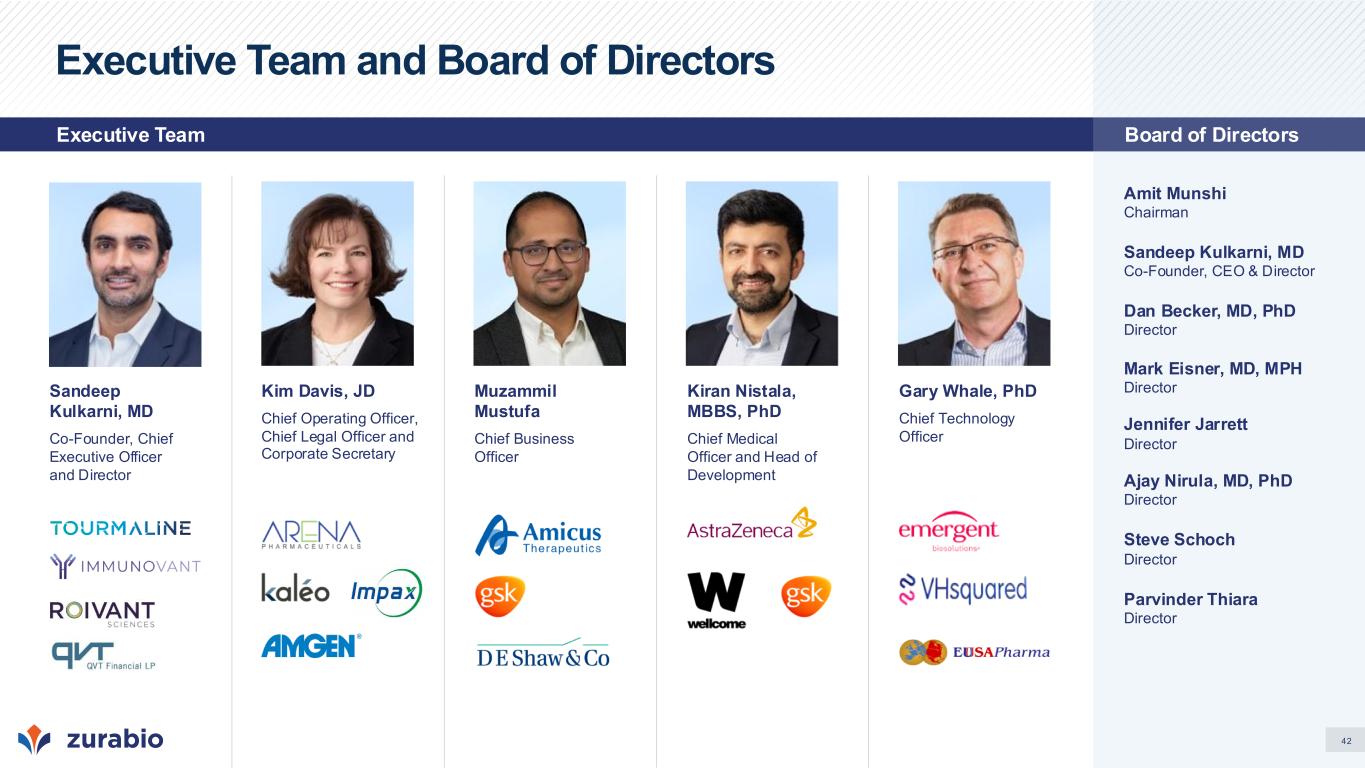
42 Executive Team and Board of Directors Amit Munshi Chairman Sandeep Kulkarni, MD Co-Founder, CEO & Director Dan Becker, MD, PhD Director Mark Eisner, MD, MPH Director Jennifer Jarrett Director Ajay Nirula, MD, PhD Director Steve Schoch Director Parvinder Thiara Director Kim Davis, JD Chief Operating Officer, Chief Legal Officer and Corporate Secretary Gary Whale, PhD Chief Technology Officer Kiran Nistala, MBBS, PhD Chief Medical Officer and Head of Development Sandeep Kulkarni, MD Co-Founder, Chief Executive Officer and Director Muzammil Mustufa Chief Business Officer Board of DirectorsExecutive Team
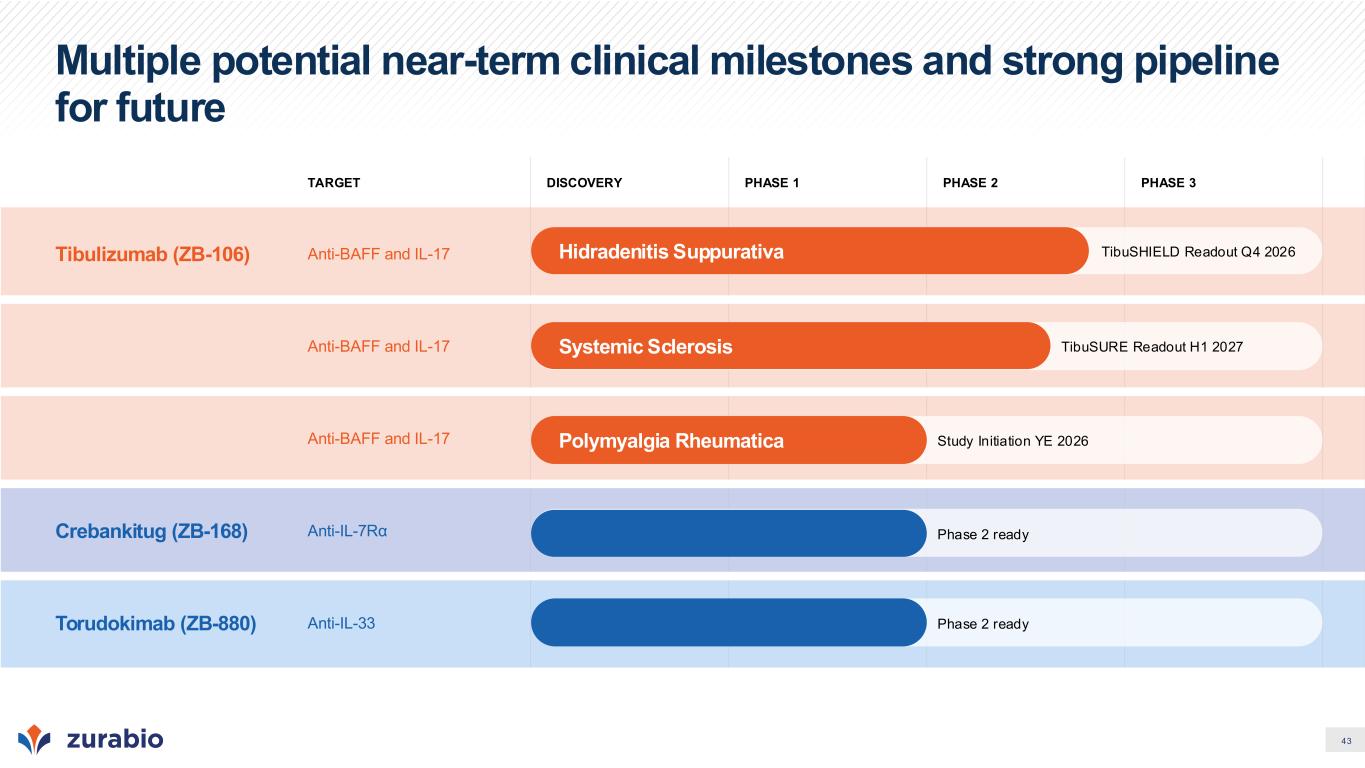
43 Multiple potential near-term clinical milestones and strong pipeline for future TARGET DISCOVERY PHASE 1 PHASE 2 PHASE 3 Tibulizumab (ZB-106) Anti-BAFF and IL-17 Anti-BAFF and IL-17 Anti-BAFF and IL-17 Crebankitug (ZB-168) Anti-IL-7Rα Torudokimab (ZB-880) Anti-IL-33 Hidradenitis Suppurativa Systemic Sclerosis Polymyalgia Rheumatica TibuSURE Readout H1 2027 TibuSHIELD Readout Q4 2026 Study Initiation YE 2026 Phase 2 ready Phase 2 ready
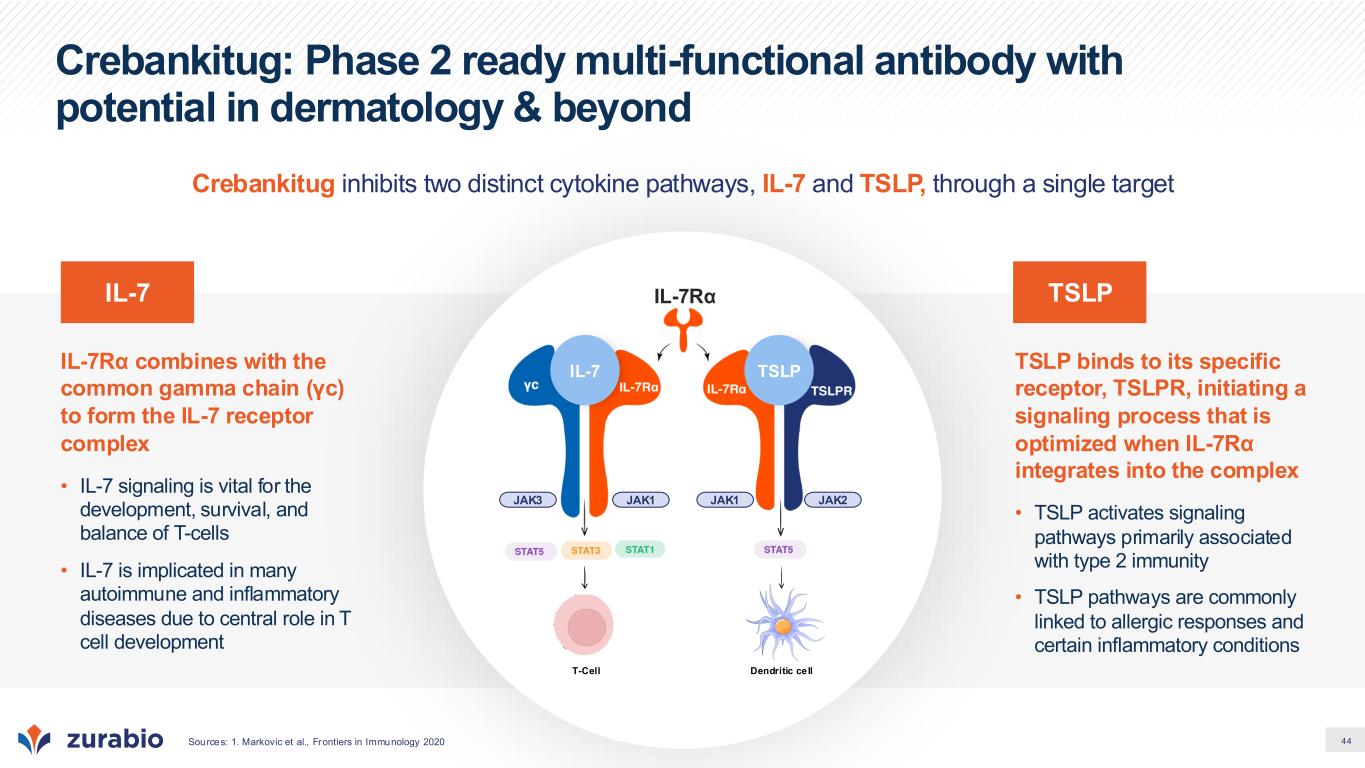
44 Crebankitug: Phase 2 ready multi-functional antibody with potential in dermatology & beyond TSLP binds to its specific receptor, TSLPR, initiating a signaling process that is optimized when IL-7Rα integrates into the complex • TSLP activates signaling pathways primarily associated with type 2 immunity • TSLP pathways are commonly linked to allergic responses and certain inflammatory conditions IL-7Rα combines with the common gamma chain (γc) to form the IL-7 receptor complex • IL-7 signaling is vital for the development, survival, and balance of T-cells • IL-7 is implicated in many autoimmune and inflammatory diseases due to central role in T cell development T-Cell JAK1 JAK2JAK1JAK3 IL-7Rα Dendritic cell TSLPIL-7 TSLPIL-7 Crebankitug inhibits two distinct cytokine pathways, IL-7 and TSLP, through a single target Sources: 1. Markovic et al., Frontiers in Immunology 2020
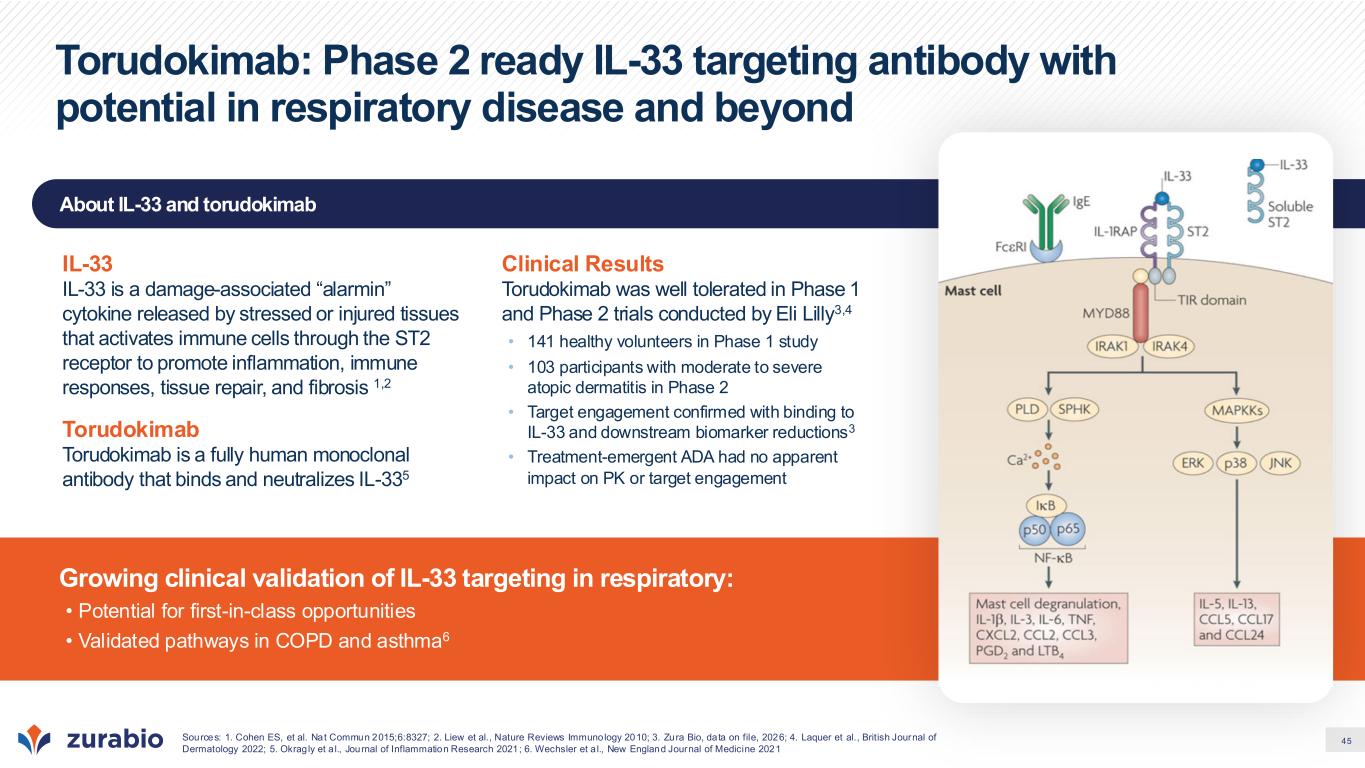
45 About IL-33 and torudokimab Growing clinical validation of IL-33 targeting in respiratory: • Potential for first-in-class opportunities • Validated pathways in COPD and asthma6 Torudokimab: Phase 2 ready IL-33 targeting antibody with potential in respiratory disease and beyond Sources: 1. Cohen ES, et al. Nat Commun 2015;6:8327; 2. Liew et al., Nature Reviews Immunology 2010; 3. Zura Bio, data on file, 2026; 4. Laquer et al., British Journal of Dermatology 2022; 5. Okragly et a l., Journal of Inflammation Research 2021; 6. Wechsler et a l., New England Journal of Medicine 2021 IL-33 IL-33 is a damage-associated “alarmin” cytokine released by stressed or injured tissues that activates immune cells through the ST2 receptor to promote inflammation, immune responses, tissue repair, and fibrosis 1,2 Torudokimab Torudokimab is a fully human monoclonal antibody that binds and neutralizes IL-335 Clinical Results Torudokimab was well tolerated in Phase 1 and Phase 2 trials conducted by Eli Lilly3,4 • 141 healthy volunteers in Phase 1 study • 103 participants with moderate to severe atopic dermatitis in Phase 2 • Target engagement confirmed with binding to IL-33 and downstream biomarker reductions3 • Treatment-emergent ADA had no apparent impact on PK or target engagement
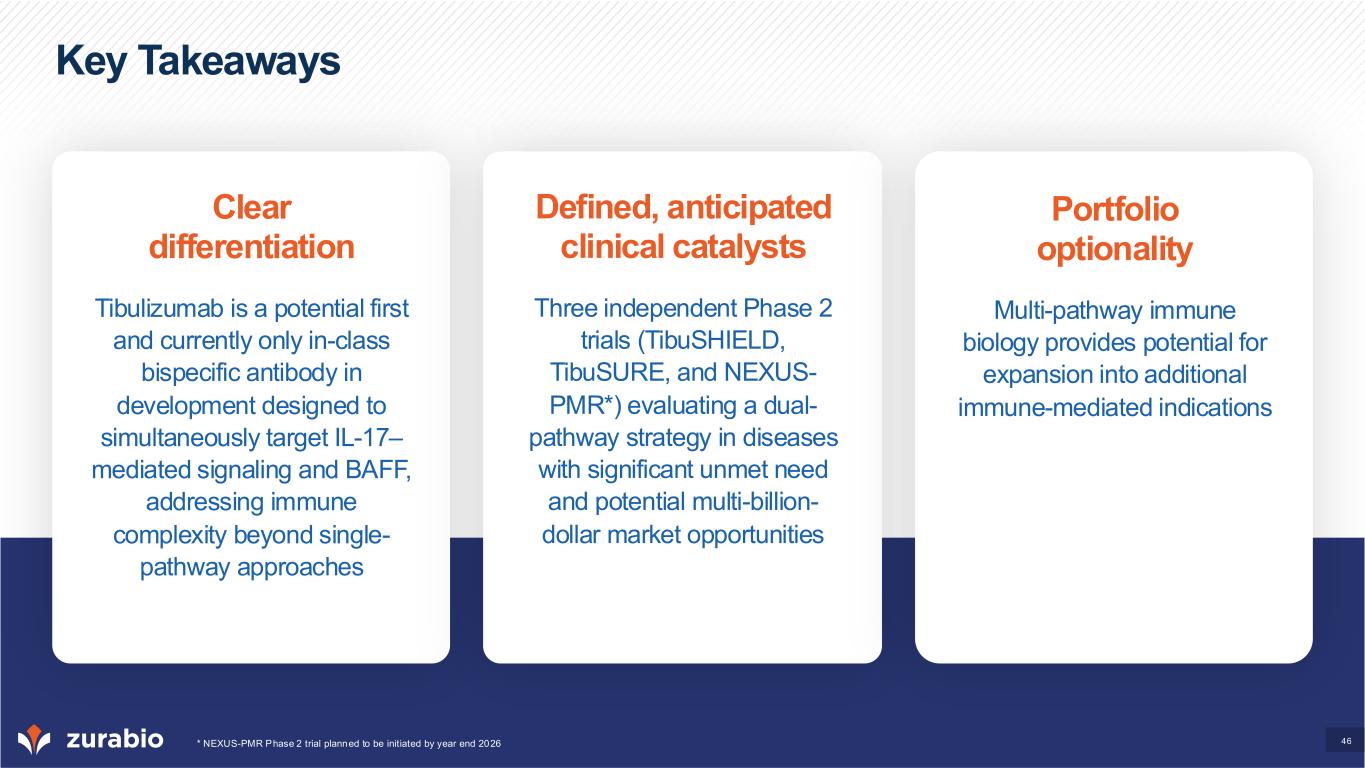
46 Key Takeaways Clear differentiation Tibulizumab is a potential first and currently only in-class bispecific antibody in development designed to simultaneously target IL-17– mediated signaling and BAFF, addressing immune complexity beyond single- pathway approaches Defined, anticipated clinical catalysts Three independent Phase 2 trials (TibuSHIELD, TibuSURE, and NEXUS- PMR*) evaluating a dual- pathway strategy in diseases with significant unmet need and potential multi-billion- dollar market opportunities Portfolio optionality Multi-pathway immune biology provides potential for expansion into additional immune-mediated indications * NEXUS-PMR Phase 2 trial planned to be initiated by year end 2026

47 Appendix
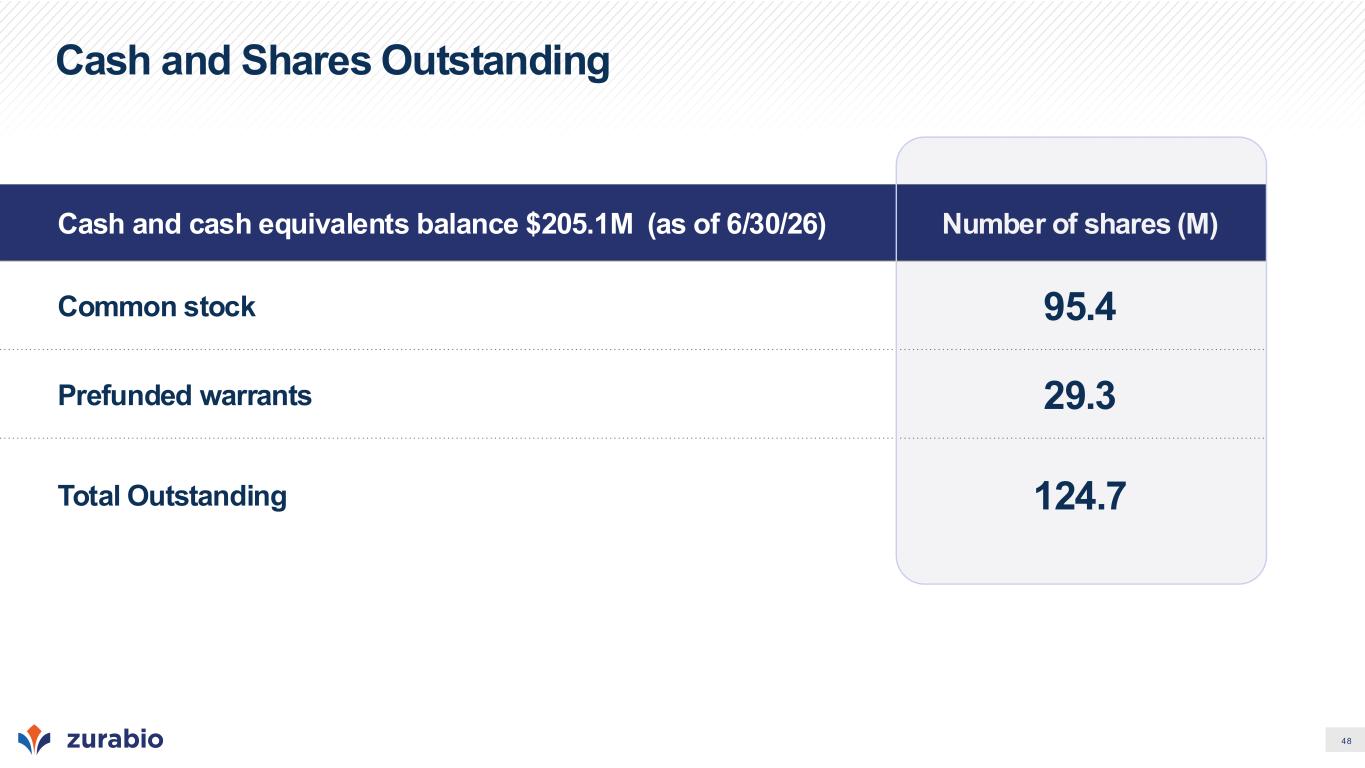
48 Cash and Shares Outstanding Cash and cash equivalents balance $205.1M (as of 6/30/26) Number of shares (M) Common stock 95.4 Prefunded warrants 29.3 Total Outstanding 124.7
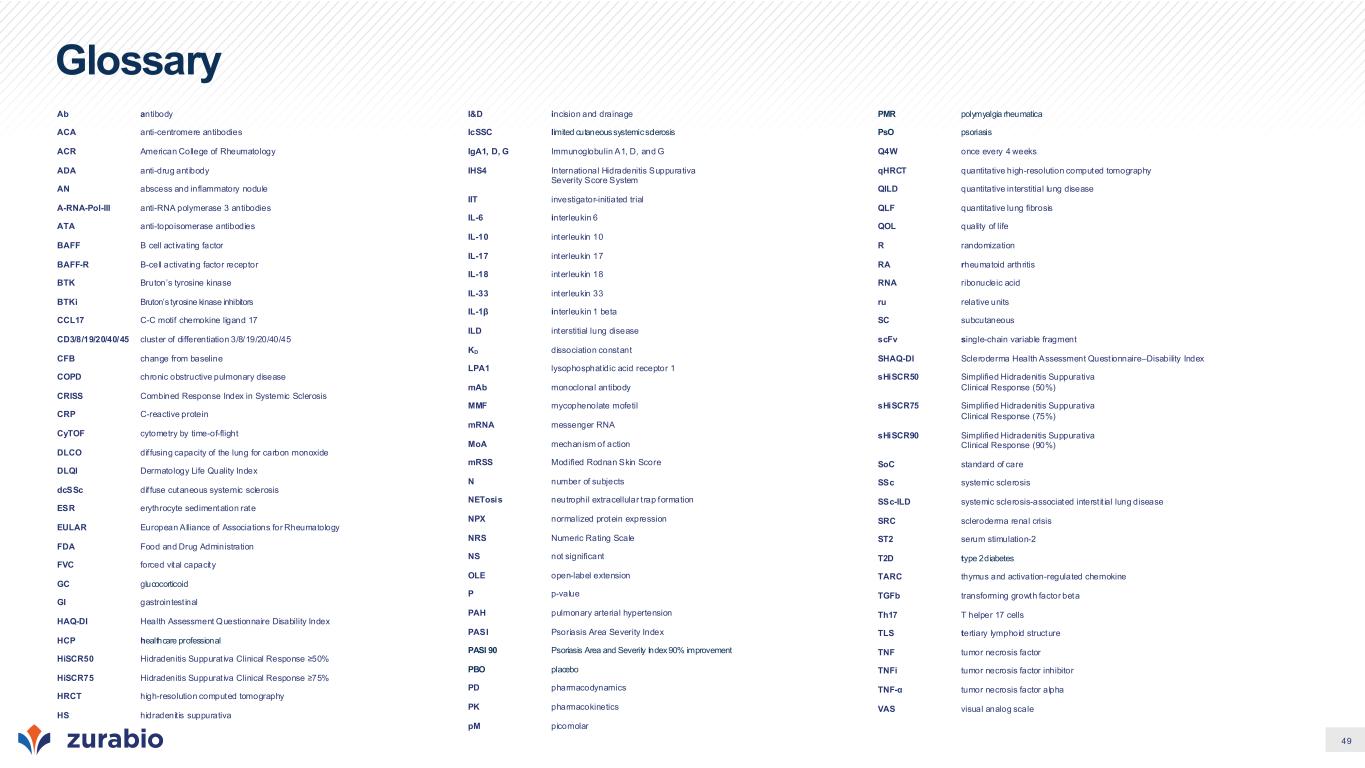
49 Glossary Ab antibody ACA anti-centromere antibodies ACR American College of Rheumatology ADA anti-drug ant ibody AN abscess and inflammatory nodule A-RNA-Pol-III anti-RNA polymerase 3 antibodies ATA anti-topoisomerase antibodies BAFF B cell act ivating factor BAFF-R B-cell activat ing factor receptor BTK Bruton’s tyrosine kinase BTKi Bruton’s tyrosine kinase inhibitors CCL17 C-C motif chemokine ligand 17 CD3/8/19/20/40/45 cluster of differentiation 3/8/19/20/40/45 CFB change from baseline COPD chronic obstructive pulmonary disease CRISS Combined Response Index in Systemic Sclerosis CRP C-reactive protein CyTOF cytometry by time-of-flight DLCO dif fusing capacity of the lung for carbon monoxide DLQI Dermatology Life Quality Index dcSSc dif fuse cutaneous systemic sclerosis ESR erythrocyte sedimentation rate EULAR European Alliance of Associations for Rheumatology FDA Food and Drug Administration FVC forced vital capacity GC glucocorticoid GI gastrointest inal HAQ-DI Health Assessment Questionnaire Disability Index HCP healthcare professional HiSCR50 Hidradenitis Suppurat iva Clinical Response ≥50% HiSCR75 Hidradenitis Suppurat iva Clinical Response ≥75% HRCT high-resolution computed tomography HS hidradenit is suppurativa I&D incision and drainage IcSSC limited cutaneous systemic sclerosis IgA1, D, G Immunoglobulin A1, D, and G IHS4 International Hidradenitis Suppurativa Severity Score System IIT investigator-initiated trial IL-6 interleukin 6 IL-10 interleukin 10 IL-17 interleukin 17 IL-18 interleukin 18 IL-33 interleukin 33 IL-1β interleukin 1 beta ILD interstitial lung disease KD dissociation constant LPA1 lysophosphat idic acid receptor 1 mAb monoclonal antibody MMF mycophenolate mofetil mRNA messenger RNA MoA mechanism of action mRSS Modified Rodnan Skin Score N number of subjects NETosis neutrophil extracellular t rap formation NPX normalized protein expression NRS Numeric Rating Scale NS not significant OLE open-label extension P p-value PAH pulmonary arterial hypertension PASI Psoriasis Area Severity Index PASI 90 Psoriasis Area and Severity Index 90% improvement PBO placebo PD pharmacodynamics PK pharmacokinetics pM picomolar PMR polymyalgia rheumatica PsO psoriasis Q4W once every 4 weeks qHRCT quantitative high-resolution computed tomography QILD quantitative interstitial lung disease QLF quantitative lung fibrosis QOL quality of life R randomization RA rheumatoid arthritis RNA ribonucleic acid ru relative units SC subcutaneous scFv single-chain variable fragment SHAQ-DI Scleroderma Health Assessment Questionnaire–Disability Index sHiSCR50 Simplified Hidradenitis Suppurativa Clinical Response (50%) sHiSCR75 Simplified Hidradenitis Suppurativa Clinical Response (75%) sHiSCR90 Simplified Hidradenitis Suppurativa Clinical Response (90%) SoC standard of care SSc systemic sclerosis SSc-ILD systemic sclerosis-associated interst it ial lung disease SRC scleroderma renal crisis ST2 serum stimulation-2 T2D type 2 diabetes TARC thymus and activation-regulated chemokine TGFb transforming growth factor beta Th17 T helper 17 cells TLS tertiary lymphoid structure TNF tumor necrosis factor TNFi tumor necrosis factor inhibitor TNF-α tumor necrosis factor alpha VAS visual analog scale

Nasdaq: ZURA | www.zurabio.com